
- New
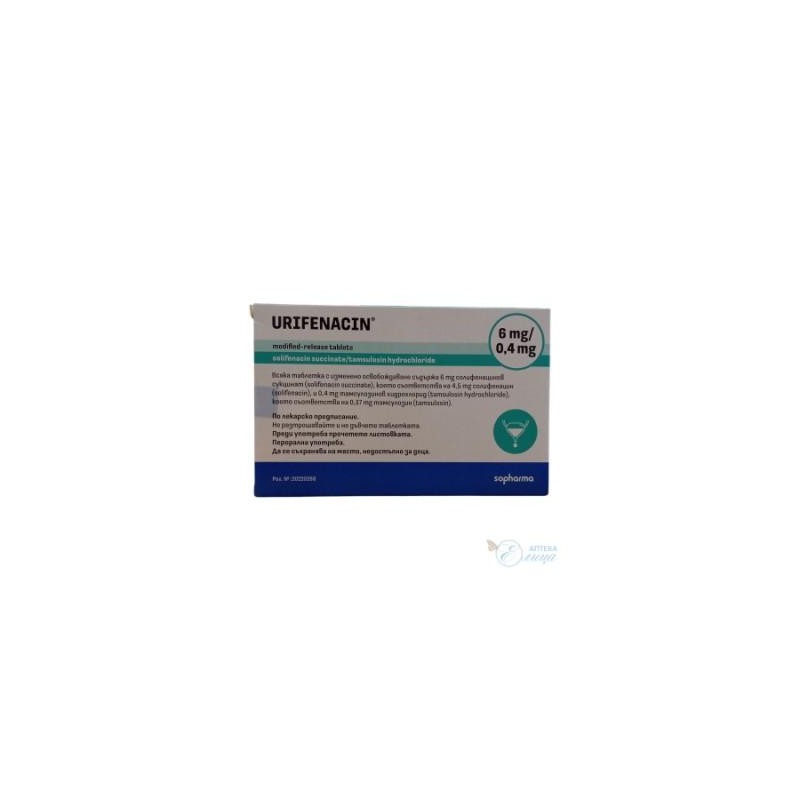

Urifenacin is a combination of two different medicines, known as solifenacin and tamsulosin, in a single tablet. Solifenacin belongs to a group of medicines called anticholinergics, while tamsulosin belongs to a group of medicines called alpha-blockers.
1. What Urifenacin is and what it is used for
Urifenacin is a combination of two different medicines, known as solifenacin and tamsulosin, in a single tablet. Solifenacin belongs to a group of medicines called anticholinergics, while tamsulosin belongs to a group of medicines called alpha-blockers.
Urifenacin is used in men to treat moderate to severe urinary storage symptoms and voiding symptoms of the lower urinary tract, caused by bladder problems and an enlarged prostate (benign prostatic hyperplasia, or BPH). Urifenacin is used when previous treatment with a single-ingredient product for this condition has not provided sufficient relief from symptoms.
As the prostate enlarges, it can lead to urination problems (voiding symptoms), such as hesitancy (difficulty starting urination), difficulty passing urine (a weak stream), dribbling after finishing urination, and a sensation that the bladder has not emptied completely. At the same time, the bladder is also affected and may contract spontaneously when you do not intend to urinate. This leads to storage symptoms, such as changes in bladder sensitivity, urgency (a strong, sudden need to urinate without prior warning), and the need to urinate more frequently. Solifenacin reduces unwanted contractions of the bladder and increases the amount of urine the bladder can hold. Consequently, you can wait longer before needing to go to the toilet. Tamsulosin allows urine to pass more easily through the urethra and facilitates urination.
2. What you need to know before you use Urifenacin
Do not use Urifenacin if:
you are allergic to solifenacin or tamsulosin, or to any of the other ingredients of this medicine (listed in section 6).
you are undergoing hemodialysis.
you have a severe liver disease.
you have a severe kidney disease AND are simultaneously being treated with medicines that may reduce the elimination of Urifenacin from the body (for example, ketoconazole, ritonavir, nelfinavir, itraconazole). Your doctor or pharmacist will inform you if this applies to you.
you have a moderate liver disease AND are simultaneously being treated with medicines that may reduce the elimination of Urifenacin from the body (for example, ketoconazole, ritonavir, nelfinavir, itraconazole). Your doctor or pharmacist will inform you if this applies to you.
you have a severe stomach or intestinal condition (including toxic megacolon—a complication associated with ulcerative colitis). you suffer from a muscle disorder called myasthenia gravis, which can cause extreme weakness in certain muscles.
you suffer from increased intraocular pressure (glaucoma), involving a gradual loss of vision. You experience faintness due to a drop in blood pressure when changing your position (sitting down or standing up); this is known as orthostatic hypotension.
Inform your doctor if you believe any of these conditions apply to you.
Warnings and precautions
Talk to your doctor or pharmacist before using Urifenacin if:
you are unable to urinate (urinary retention).
you have an obstruction (blockage) in your digestive system.
there is a risk that your digestive system activity may slow down (gastrointestinal motility). Your doctor will inform you if this is the case.
you have a hiatal hernia (protrusion of the upper part of the stomach through an opening in the diaphragm into the chest cavity) or heartburn, and/or if you are simultaneously taking medications that can cause or worsen existing inflammation of the esophagus (esophagitis).
you suffer from a specific type of nerve disorder (autonomic neuropathy).
you suffer from severe kidney disease.
you suffer from moderate liver disease.
You will need to undergo periodic medical check-ups to monitor the progression of the condition for which you are being treated. Urifenacin may affect your blood pressure, which can make you feel dizzy or lightheaded, or—rarely—lead to a loss of consciousness (orthostatic hypotension). If you experience any of these symptoms, you should sit or lie down until they pass.
If you are undergoing or scheduled for eye surgery for a cloudy lens (cataract) or increased intraocular pressure (glaucoma), please inform your ophthalmologist that you have taken, are currently taking, or plan to use Urifenacin. This will allow the medical professional to take the necessary precautions regarding your treatment and the surgical techniques to be employed. Consult your doctor about whether you should postpone or temporarily stop taking this medication in preparation for surgery for a cloudy lens (cataract) or increased intraocular pressure (glaucoma).
Children and adolescents
Do not give this medicine to children or adolescents.
Other medicines and Urifenacin
Tell your doctor or pharmacist if you are taking, have recently taken, or might take
other medicines.
It is particularly important to inform your doctor if you are using:
medicines such as ketoconazole, erythromycin, ritonavir, nelfinavir, itraconazole, verapamil, diltiazem, and paroxetine, which reduce the rate at which Urifenacin is eliminated from the body.
other anticholinergic medicines, as the effects and side effects of both medicines may be intensified if you take two medicines of the same type.
cholinergics, as they may reduce the effect of Urifenacin.
medicines such as metoclopramide and cisapride, which accelerate the activity of the digestive system. Urifenacin may reduce their effect.
other alpha-blockers, as this may lead to an undesirable drop in blood pressure.
medicines such as bisphosphonates, which may cause or exacerbate inflammation of the esophagus (esophagitis).
Urifenacin with food and drink
Urifenacin can be taken with or without food, according to your preference.
Pregnancy, breastfeeding, and fertility
Urifenacin is not indicated for use in women.
In men, abnormal ejaculation (ejaculatory disorders) has been reported. This means that the seminal fluid does not leave the body through the urethra but instead enters the urinary bladder (retrograde ejaculation), or the volume of the ejaculate is reduced or absent (absence of ejaculation). This phenomenon is harmless.
Driving and using machines
Urifenacin may cause dizziness, blurred vision, fatigue, and—less commonly—drowsiness. If you experience these side effects, do not drive or operate machinery.
3. How to use Urifenacin
Always take this medicine exactly as your doctor or pharmacist has told you. If you are unsure about anything, ask your doctor or pharmacist.
The maximum daily dose is one tablet, containing 6 mg of solifenacin and 0.4 mg of tamsulosin, taken by mouth. The medicine may be taken with or without food, according to your preference. Do not crush or chew the tablet.
If you have taken more Urifenacin than you should
If you have taken more tablets than you were instructed to take, or if someone else accidentally takes your tablets, contact your doctor, pharmacist, or a hospital immediately for advice.
In the event of an overdose, your doctor may administer activated charcoal; immediate gastric lavage (stomach pumping) may be beneficial if performed within 1 hour of the overdose. Do not induce vomiting. Symptoms of an overdose may include: dry mouth and blurred vision, seeing things that are not there (hallucinations), excessive agitation, seizures (convulsions), difficulty breathing, an increased heart rate (tachycardia), an inability to empty the bladder fully or partially (urinary retention), and/or an undesirable drop in blood pressure.
If you forget to take Urifenacin
Take your next Urifenacin tablet as usual. Do not take a double dose to make up for a forgotten tablet.
If you stop taking Urifenacin
If you stop taking Urifenacin, your original symptoms may return or worsen. Always consult your doctor if you are considering stopping treatment.
If you have any further questions regarding the use of this medicine, ask your doctor or pharmacist.
4. Possible side effects
Like all medicines, Urifenacin can cause side effects, although not everyone gets them. The most serious adverse reaction observed uncommonly (may affect up to 1 in 100 men) during clinical trials with solifenacin succinate/tamsulosin hydrochloride is acute urinary retention—a sudden inability to pass urine. If you suspect you may be experiencing this, consult a doctor immediately. You may need to stop taking Urifenacin.
Allergic reactions that may occur with Urifenacin:
A severe allergic reaction (anaphylactic reaction) may occur (frequency unknown).
Signs of an allergic reaction may include a skin rash (which may be itchy) or hives (urticaria).
Rare symptoms include swelling of the face, lips, mouth, tongue, or throat, which may cause difficulty in swallowing or breathing (angioedema). Angioedema has been reported rarely with tamsulosin and very rarely with solifenacin. If angioedema occurs, Urifenacin must be stopped immediately and not resumed.
If you experience an allergic attack or a severe skin reaction (e.g., blistering and peeling of the skin), you must inform your doctor immediately and stop using Urifenacin. Appropriate therapy and/or measures should be implemented.
Very common side effects (may affect more than 1 in 10 men)
Dry mouth
Common side effects (may affect up to 1 in 10 men)
Constipation
Indigestion (dyspepsia)
Dizziness
Blurred vision
Fatigue (exhaustion)
Abnormal ejaculation (ejaculatory disorder). This means that semen does not leave the body through the urethra but instead enters the bladder (retrograde ejaculation), or the volume of the ejaculate is reduced or absent (impaired ejaculation). This phenomenon is harmless. Nausea (feeling sick)
Abdominal pain
Other uncommon side effects (may affect up to 1 in 100 men)
Drowsiness (somnolence)
Itching (pruritus)
Urinary tract infection, bladder infection (cystitis)
Disturbance in the sense of taste (dysgeusia)
Dry eyes
Dry nose
Reflux disease (gastro-oesophageal reflux)
Dry throat
Dry skin
Difficulty passing urine
Fluid accumulation in the lower legs (oedema)
Headache
Rapid or irregular heartbeat (palpitations)
Feeling dizzy or weak, especially when standing up (orthostatic hypotension)
Runny or blocked nose (rhinitis)
Diarrhoea
Vomiting
Fatigue (asthenia)
Rare side effects (may affect up to 1 in 1,000 men)
Accumulation of a large amount of hardened stool in the large intestine (faecal impaction), obstruction (blockage) of the large intestine
Loss of consciousness (syncope)
Skin allergy causing swelling that affects the tissues just beneath the skin surface (angioedema)
Very rare side effects (may affect up to 1 in 10,000 men)
Hallucinations, Confusion
Allergic skin reaction (erythema multiforme)
Prolonged and painful erection (usually not during sexual activity) (priapism)
Rash, inflammation, and blistering of the skin and/or mucous membranes of the lips, eyes, mouth, nasal passages, or genitals (Stevens-Johnson syndrome)
Frequency unknown (cannot be estimated from the available data)
Decreased appetite
High levels of potassium in the blood (hyperkalemia), which may cause an abnormal heart rhythm
Increased pressure in the eyes (glaucoma)
Irregular or abnormal heart rhythm (QT prolongation, Torsade de Pointes, atrial fibrillation, arrhythmia)
Rapid heart rate (tachycardia)
Shortness of breath (dyspnea)
During surgery on the eye for lens clouding (cataract) or increased intraocular pressure (glaucoma), the pupil (the black circle in the center of the eye) may not dilate as much as necessary. Additionally, the iris (the colored part of the eye) may lose tone during the surgery. Voice disorder
Liver disorder
Muscle weakness
Kidney disorder
Impaired vision
Nosebleed (epistaxis)
Delirium
Disorders of bowel function (ileus)
Abdominal discomfort
Severe skin allergy leading to skin peeling (exfoliative dermatitis)
Reporting of side effects
If you experience any side effects, talk to your doctor or pharmacist.
5. How to store Urifenacin
Keep out of the reach and sight of children.
Do not use this medicine after the expiry date which is stated on the carton or blister after "EXP:". The expiry date refers to the last day of that month.
This medicinal product does not require any special storage conditions.
Do not dispose of medicines via wastewater or household waste. Ask your pharmacist how to dispose of medicines no longer required. These measures will help to protect the environment.
6. Contents of the pack and other information
What Urifenacin contains
The active substances are: solifenacin succinate and tamsulosin hydrochloride. Each modified-release tablet contains 6 mg of solifenacin succinate, corresponding to 4.5 mg of solifenacin, and 0.4 mg of tamsulosin hydrochloride, corresponding to 0.37 mg of tamsulosin.
The other ingredients are microcrystalline cellulose; macrogol; colloidal anhydrous silica; magnesium stearate; calcium hydrogen phosphate; silicified microcrystalline cellulose; low-substituted hydroxypropyl cellulose; hypromellose; red iron oxide (E 172).
What Urifenacin looks like and contents of the pack
Urifenacin 6 mg/0.4 mg tablets are round (9 mm in diameter), biconvex, red, film-coated tablets, with the marking "6 04" engraved on one side.
PA/Aluminium/PVC/Aluminium blister in an outer cardboard carton, containing 10, 30, 60, or 100 tablets.
Not all pack sizes may be marketed.
Urifenacin is a combination of two different medicines, known as solifenacin and tamsulosin, in a single tablet. Solifenacin belongs to a group of medicines called anticholinergics, while tamsulosin belongs to a group of medicines called alpha-blockers.