
- New
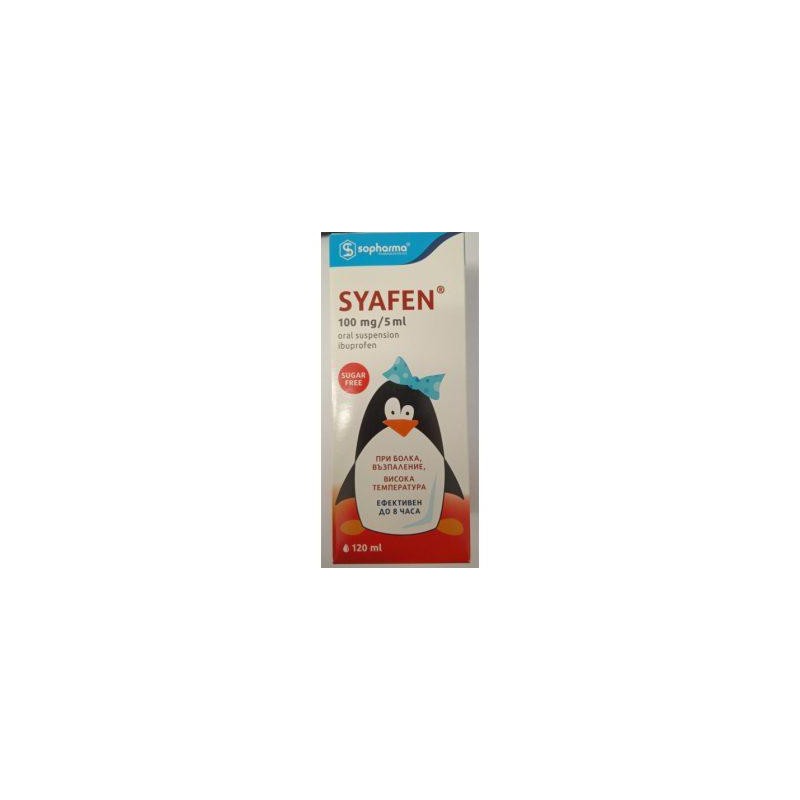
Siafen oral suspension is an anti-inflammatory, analgesic, and antipyretic medicinal product for use in children. It contains the active substance ibuprofen, which belongs to the group of non-steroidal anti-inflammatory drugs (NSAIDs).
1. What Siafen is and what it is used for
Siafen oral suspension is an anti-inflammatory, analgesic (pain-relieving), and antipyretic (fever-reducing) medicine for use in children. It contains the active substance ibuprofen, which belongs to the group of non-steroidal anti-inflammatory drugs (NSAIDs).
Siafen oral suspension is used for:
rapid and effective reduction of your child's high temperature (fever), including fever following immunization;
rapid and effective relief of mild to moderate pain, such as that associated with a sore throat, teething, toothache, earache, headache, minor injuries, and sprains;
relief of symptoms associated with colds and flu.
2. What you need to know before using Siafen
Do not use Siafen:
If your child is allergic to the active substance ibuprofen or to any of the other ingredients of this medicine (listed in section 6). If your child has ever experienced shortness of breath, asthma, a runny nose, hives, or swelling of the face, tongue, lips, or throat after taking acetylsalicylic acid (aspirin) or other pain-relieving and fever-reducing medications (NSAIDs).
If your child currently has, or has previously had, an ulcer, perforation, or gastrointestinal bleeding (two or more episodes of confirmed ulceration or bleeding).
If your child has previously experienced a gastrointestinal perforation or bleeding following the use of pain-relieving and fever-reducing medications (NSAIDs).
If your child suffers from severe liver, kidney, or heart failure.
During the last three months of pregnancy.
Warnings and precautions
Talk to your doctor or pharmacist before using Siafen.
If your child suffers from allergic conditions that may cause breathing difficulties (such as hay fever, bronchial asthma, chronic sinusitis, and/or nasal polyps), or if they are hypersensitive to certain foods or medications.
Signs of an allergic reaction to this medicine—including breathing difficulties, swelling of the face and neck area (angioedema), and chest pain—have been reported with the use of ibuprofen. Stop using Siafen immediately and contact your doctor or an emergency department right away if you notice any of these signs.
If your child is taking other medicines from the NSAID group (including COX-2 inhibitors such as celecoxib and etoricoxib), as their concomitant use should be avoided.
If your child suffers from an autoimmune disease, such as systemic lupus erythematosus (SLE) or mixed connective tissue disease.
If your child has or has had high blood pressure and/or heart failure. Discuss the treatment with the attending physician. Do not exceed the recommended doses or the duration of treatment (24 hours for infants aged 3–6 months weighing over 5 kg, or 3 days for children over 6 months of age).
Siafen should be used with caution in children with liver disease, kidney disease, cardiovascular disease, or blood clotting disorders.
Siafen should be used with caution in severely dehydrated children, as there is a risk of kidney damage.
If your child suffers from a chronic bowel disease (Crohn’s disease or ulcerative colitis), as ibuprofen may exacerbate the condition (see section 4).
Siafen may cause irritation to your child’s stomach or intestines at any point during treatment, with or without warning symptoms. Stop treatment immediately and consult your doctor if your child begins to complain of stomach pain, nausea, or vomiting—especially if they have a history of an ulcer or gastrointestinal bleeding.
If your child is taking Siafen concurrently with corticosteroids (e.g., prednisolone), anticoagulants (such as warfarin), antidepressants (SSRIs), or blood-thinning agents (such as acetylsalicylic acid), there is an increased risk of gastrointestinal complications.
Serious skin reactions—including exfoliative dermatitis, erythema multiforme, Stevens-Johnson syndrome, toxic epidermal necrolysis, drug reaction with eosinophilia and systemic symptoms (DRESS), and acute generalized exanthematous pustulosis (AGEP)—have been reported in association with ibuprofen treatment. Stop using Siafen and seek immediate medical attention if you notice any of the symptoms associated with these serious skin reactions, as described in section 4.
You have an infection — see the "Infections" section below.
This medicinal product may also be used by adults, if necessary. In addition to the information above, the following warnings also apply:
There is evidence that the use of medications such as Siafen (ibuprofen)—especially at high doses and over an extended period—may be associated with a slightly increased risk of heart-related problems (such as myocardial infarction or stroke). Do not exceed the recommended doses or the duration of treatment.
In cases of heart problems, a history of stroke, or a potential risk of developing such conditions (for example, due to high blood pressure, diabetes, high cholesterol levels, or smoking)...
...treatment should be discussed with the attending physician or pharmacist.
In elderly patients, adverse reactions—particularly gastrointestinal bleeding and intestinal perforations, which can sometimes be fatal—occur more frequently when high doses of NSAIDs are used. Such patients should begin treatment with the lowest effective dose possible.
Infections
Siafen may mask signs of infection, such as fever and pain. Consequently, Siafen could delay appropriate treatment for an infection, potentially increasing the risk of complications. This has been observed in cases of bacterial pneumonia and bacterial skin infections associated with chickenpox. If you are taking this medication while suffering from an infection and the symptoms of that infection persist or worsen, you should consult a doctor immediately.
Other medicines and Siafen
Inform your doctor or pharmacist if your child is taking, has recently taken, or might take any other medicines, including those obtained without a prescription.
Tell your doctor if your child is taking:
other medicines for pain relief or fever that contain ibuprofen, other NSAIDs, or aspirin (> 75 mg/day). Siafen should not be taken concurrently with other medications from the same class (NSAIDs);
corticosteroids (e.g., prednisolone) or anticoagulants (e.g., warfarin); diuretics (water pills);
medicines for high blood pressure (antihypertensives); medicines for heart failure – digoxin;
antibiotics such as ciprofloxacin and levofloxacin;
lithium (a medicine for depression);
methotrexate (a medicine for cancer or rheumatism);
antiplatelet agents (aspirin) and selective serotonin reuptake inhibitors (medicines for depression);
medicines that suppress the immune system (cyclosporine, tacrolimus);
a medicine for the treatment of AIDS (zidovudine).
Pregnancy, breastfeeding, and fertility
Siafen oral suspension is intended for use in children, but it may also be used by adults if necessary. Consult your doctor or pharmacist before using any medicine.
Pregnancy
Inform your doctor if you become pregnant while using Siafen oral suspension. Do not take this medicine during the last 3 months of pregnancy, as it may harm your unborn child or cause problems during childbirth. It may cause kidney and heart problems in your unborn baby. It may affect your and your baby’s tendency to bleed, and it may cause labor to start later or last longer than expected. You should not take Siafen oral suspension during the first 6 months of pregnancy unless absolutely necessary and upon the recommendation of your doctor. If you require treatment during this period, or while attempting to conceive, the lowest possible dose should be used for the shortest possible duration. From the 20th week of pregnancy onwards, the use of Siafen oral suspension for more than a few days may cause kidney problems in your unborn baby; this can lead to a reduction in the volume of the amniotic fluid surrounding the baby (oligohydramnios). If treatment is required for longer than a few days, your doctor may recommend additional monitoring.
Breastfeeding
When Siafen is used for a short duration at recommended doses, only very small amounts of ibuprofen and its metabolites pass into breast milk. Generally, there is no need to discontinue breastfeeding, as there is no known evidence of harm to nursing infants.
Fertility
Siafen oral suspension belongs to a class of medications (NSAIDs) for which isolated cases of temporary reduced fertility in women have been reported following the long-term use of higher doses. This effect is reversible upon discontinuation of the medication.
Driving and using machinery
Siafen oral suspension is a formulation intended for use in children; however, it may also be used by adults if necessary. When used for a short period at the recommended doses, this medicine has no or negligible influence on the ability to drive or use machines.
Siafen oral suspension contains methyl parahydroxybenzoate and propyl parahydroxybenzoate, which may cause allergic reactions (possibly delayed).
Siafen oral suspension contains sorbitol. If your child has an intolerance to certain sugars, consult a doctor before starting treatment with Siafen.
3. How to use Siafen
Always use this medicine exactly as described in this leaflet or as your doctor or pharmacist has told you. If you are not sure about anything, ask your doctor or pharmacist.
The lowest effective dose should be used for the shortest duration necessary to relieve symptoms. If you have an infection, consult a doctor immediately if symptoms (e.g., fever and pain) persist or worsen (see section 2).
For pain, fever, and symptoms of cold and flu:
The usual daily dose of Siafen oral suspension is 20 to 30 mg/kg of body weight, divided into several doses as follows:
Child's Age Amount Frequency per 24 hours
Infants aged 3 to 6 months (over 5 kg) 2.5 ml 3 times
Infants aged 6 to 12 months 2.5 ml 3 to 4 times
Children aged 1–3 years 5 ml 3 times
Children aged 4–6 years 7.5 ml 3 times
Children aged 7–9 years 10 ml 3 times
Children aged 10–12 years 15 ml 3 times
Siafen may be administered approximately every 6 to 8 hours (or at an interval of at least 4 hours between individual doses, when necessary). Do not exceed the dose specified in the instructions. Siafen oral suspension is not recommended for children under 3 months of age or weighing less than 5 kg, unless prescribed by a physician.
Fever following immunization:
Usually, a single 2.5 ml dose of Siafen is sufficient. If necessary, another 2.5 ml dose may be administered 6 hours later; however, no more than two 2.5 ml doses should be given within a 24-hour period. If the fever does not subside, do not administer a third dose. You must consult your attending physician.
Duration of treatment: Siafen oral suspension is recommended for short-term use only—no more than 3 days.
Infants aged 3–5 months (weighing over 5 kg): Medical attention should be sought if symptoms worsen or do not improve within 24 hours, despite the use of Siafen oral suspension (three doses).
Infants and children over 6 months of age: If it becomes necessary to use this medicinal product for more than 3 days, or if the child's symptoms worsen, medical advice should be sought.
It is recommended to use the lowest effective dose for the shortest possible duration.
Method of administration: Oral. For patients with a sensitive stomach, it is recommended to take Siafen oral suspension during meals.
Shake well before use. If your child has taken more than the required dose of Siafen, or if the medication has been accidentally ingested by children, contact a doctor or the nearest hospital immediately for an assessment of the risk and advice on the necessary course of action.
Symptoms may include nausea, vomiting (possibly containing blood), headache, ringing in the ears, confusion, and rapid, involuntary eye movements. At high doses, reports have included drowsiness, chest pain, heart palpitations, loss of consciousness, seizures (primarily in children), weakness and dizziness, blood in the urine, a feeling of coldness, and breathing difficulties.
If you miss a dose of Siafen
Do not give or take a double dose to make up for a missed one.
If you forget to take or give a dose, take or administer it as soon as you realize the omission, then continue with the next dose according to the dosing intervals specified above.
If you have any further questions regarding the use of this medicine, ask your pharmacist.
4. Possible side effects
Like all medicines, this medicine can cause side effects, although not everyone experiences them.
Side effects associated with Siafen are very rare and are typical of the class of drugs known as NSAIDs (non-steroidal anti-inflammatory drugs). Stop treatment and contact a doctor immediately if any of the following symptoms occur:
swelling of the face, tongue, lips, or throat, accompanied by difficulty swallowing and shortness of breath. Seek medical attention immediately. These may be signs of rare but serious allergic reactions.
traces of blood in the stool, dark-colored stool, or vomiting containing blood or dark, coffee-ground-like particles. This may indicate an exacerbation of existing colitis or Crohn's disease.
red, flat, target-like or circular spots on the body—often with blisters in the center—peeling skin, or ulcers in the mouth, throat, nose, genital area, or eyes. These serious skin rashes may be preceded by fever and flu-like symptoms (exfoliative dermatitis, erythema multiforme, Stevens-Johnson syndrome, toxic epidermal necrolysis).
a severe skin reaction known as DRESS syndrome. Symptoms of DRESS include an extensive rash, fever, and enlarged lymph nodes.
a red, scaly, widespread rash with bumps under the skin and blisters, accompanied by fever. These symptoms typically appear at the start of treatment (acute generalized exanthematous pustulosis). Uncommon (occur in fewer than 1 in 100 users):
Consult with
...with a doctor if the following occur:
skin rashes and itching;
headache;
digestive disturbances, heartburn, pain, or other stomach problems.
Rare (occurring in fewer than 1 in 1,000 users):
Consult a doctor if these persist for more than a few days or become concerning:
diarrhea, abdominal bloating, constipation, or vomiting.
Very rare (occurring in fewer than 1 in 10,000 users):
Stop treatment and consult a doctor if any of the following symptoms occur:
fever, sore throat, mouth ulcers, flu-like symptoms, severe exhaustion, unusual tendency to bleed, or easy bruising (abnormalities in blood counts);
stiff neck, headache, nausea, vomiting, fever, and disorientation (symptoms of aseptic meningitis);
palpitations, chest pain, or irregular heartbeat. Medicines such as Siafen (ibuprofen) may be associated with a slightly increased risk of a heart event (myocardial infarction) or stroke; however, this is unlikely when used in pediatric doses. Frequency not known:
a red, scaly, widespread rash with bumps under the skin and blisters, located mainly in the skin folds, on the trunk, and on the upper limbs, accompanied by a high fever at the start of treatment (acute generalized exanthematous pustulosis). Stop using Siafen if you develop these symptoms and seek medical attention immediately. See also "section 2";
the skin becomes sensitive to light;
chest pain, which may be a sign of a potentially serious allergic reaction known as Kounis syndrome.
Elderly patients using this medicine are at an increased risk of experiencing adverse reactions.
Adverse reactions can be minimized by using the lowest effective dose for the shortest possible duration required to control symptoms.
5. How to store Siafen
Keep out of the reach and sight of children.
Store in the original packaging at a temperature below 25°C.
Do not freeze.
Use the medicine within 1 month of opening the bottle.
Do not use this medicine after the expiry date stated on the packaging. The expiry date refers to the last day of the month indicated.
Do not dispose of medicines via wastewater or household waste. Ask your pharmacist how to dispose of medicines no longer required. These measures will help to protect the environment.
6. Contents of the pack and other information
What Siafen contains
The active substance is: ibuprofen 100 mg per 5 ml of suspension.
The other ingredients are: sorbitol (E 420), sodium starch glycolate (type A), xanthan gum, polysorbate 80, glycerol, citric acid monohydrate, sodium citrate dihydrate, propylene glycol, methyl parahydroxybenzoate (E 218), propyl parahydroxybenzoate (E 216), sodium saccharin, "Tutti Frutti" liquid flavouring, purified water.
What Siafen looks like and contents of the pack
An oral suspension, white to off-white in colour, with a fruity odour. 120 ml in dark glass bottles with an aluminium or polyethylene cap, or in dark PET bottles with a polyethylene cap; 1 bottle per carton, together with a measuring cup and a package leaflet.
Siafen oral suspension is an anti-inflammatory, analgesic, and antipyretic medicinal product for use in children. It contains the active substance ibuprofen, which belongs to the group of non-steroidal anti-inflammatory drugs (NSAIDs).