
- New
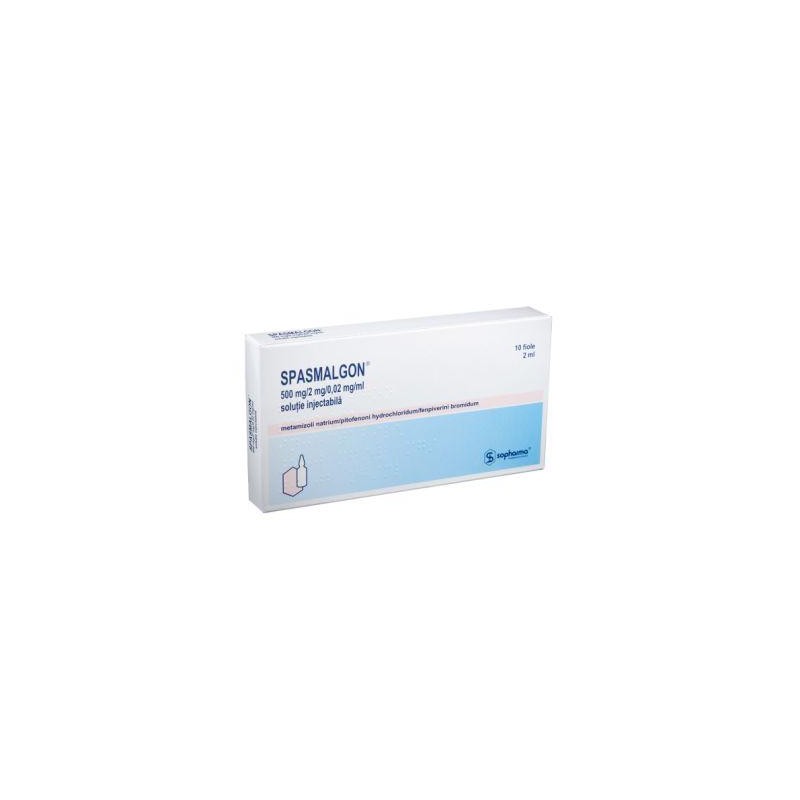
Spasmalgon is a combination medicinal product that relieves smooth muscle spasms in the gastrointestinal tract, the biliary and urinary tracts, and the reproductive organs, and exerts a pronounced analgesic effect.
1. What Spasmalgon is and what it is used for
Spasmalgon is a combination medicinal product that relieves smooth muscle spasms in the gastrointestinal tract, the biliary and urinary tracts, and the reproductive organs; it also exerts a pronounced analgesic (pain-relieving) effect.
Spasmalgon is used for short-term treatment of conditions accompanied by acute, moderate to severe pain, such as colic in the gastrointestinal or biliary tracts, renal colic (associated with kidney stones), and painful menstruation (dysmenorrhea).
2. What you need to know before you use Spasmalgon
Do not use Spasmalgon:
if you are allergic (hypersensitive) to the active substances of Spasmalgon;
if you are allergic (hypersensitive) to pyrazolone derivatives or other non-steroidal anti-inflammatory drugs (NSAIDs);
if you have severe liver and/or kidney disease;
if you have gastrointestinal obstruction or megacolon (enlargement of the large intestine);
if you have acute hepatic porphyria (a hereditary disorder affecting red blood cell formation) or glucose-6-phosphate dehydrogenase deficiency (a hereditary condition involving a deficiency of this enzyme); if you have impaired bone marrow function (following cytostatic treatment) or hematological (blood) disorders, such as: aplastic anemia (a reduction in the number of blood cells, leading to weakness, bruising, or an increased susceptibility to infection), agranulocytosis (a severe reduction in the number of white blood cells, which increases the risk of infections), and leukopenia (a decrease in the total number of white blood cells);
prostate adenoma;
atony of the gallbladder or urinary bladder;
if you have hypotension (low blood pressure) or unstable blood circulation;
if you are pregnant or breastfeeding.
This medicinal product should not be used in children under 15 years of age.
Warnings and precautions
Talk to your doctor before using Spasmalgon.
Before starting treatment with Spasmalgon, inform your doctor if you have kidney or liver disease; conditions involving narrowing of the gastrointestinal tract and difficulty in the passage of gastrointestinal contents (achalasia, pyloroduodenal stenosis); gastroesophageal reflux disease, intestinal atony, or paralytic ileus; glaucoma (increased intraocular pressure); or myasthenia gravis (muscle weakness); heart diseases (arrhythmias, ischemic heart disease, congestive heart failure).
Treatment with Spasmalgon carries a risk of severe hypersensitivity reactions, including anaphylactic reactions. Upon the first signs of hypersensitivity, administration of the product must be stopped immediately, and emergency measures must be taken to manage the condition (administration of adrenaline, glucocorticoids, and antihistamines).
The risk of severe hypersensitivity reactions to metamizole is significantly increased in the following patient groups:
patients with analgesic-induced asthma syndrome;
patients with bronchial asthma, especially if they also suffer from rhinosinusitis (inflammation of the nose and nasal cavities) and nasal polyps;
patients with hypersensitivity to colorings (e.g., tartrazine) or preservatives (benzoates);
patients with alcohol intolerance. Such patients react even to small amounts of alcohol with symptoms such as sneezing, tearing, and intense facial flushing. This type of alcohol intolerance may be an indication of undiagnosed analgesic-induced asthma syndrome. Treatment with medications containing metamizole carries a risk of shock (circulatory collapse) and agranulocytosis (a severe reduction in the white blood cell count, which increases the likelihood of developing infections). It is independent of the dose and cannot be predicted. When treating patients with blood disorders—or a history thereof—with Spasmalgon, it is necessary to monitor the blood count during the course of treatment.
Spasmalgon solution for injection may cause a drop in blood pressure. The risk of such a reaction is also increased in:
patients with low blood pressure, fluid loss, impaired circulation, or incipient circulatory collapse (e.g., in patients who have suffered a heart attack or severe injuries), as well as patients with a high fever. In such cases, intramuscular injection of Spasmalgon must be performed while the patient is lying down, with continuous monitoring of blood pressure, heart rate, and respiration.
Liver problems
Cases of liver inflammation have been reported in patients taking metamizole, with symptoms developing anywhere from a few days to several months after the start of treatment. Stop using Spasmalgon and contact a doctor if you experience symptoms of liver problems, such as nausea or vomiting, fever, fatigue, loss of appetite, dark urine, pale stools, yellowing of the skin or the whites of the eyes, itching, a rash, or pain in the upper abdomen. Your doctor will assess your liver function.
You must not take Spasmalgon if you have previously taken a medicinal product con...
...containing metamizole, and you have experienced liver problems.
Serious skin reactions
Serious skin reactions, including Stevens-Johnson syndrome, toxic epidermal necrolysis, and drug reaction with eosinophilia and systemic symptoms (DRESS), have been reported in association with metamizole treatment. Stop using metamizole and seek medical attention immediately if you notice any of the symptoms associated with these serious skin reactions, as described in section 4.
If you have ever developed severe skin reactions, you must never resume treatment with Spasmalgon (see section 4).
Other medicines and Spasmalgon
Please inform your doctor if you are taking, have recently taken, or might take any other medicines.
Adverse interactions may occur when Spasmalgon is used concomitantly with the following medicines: medicines that affect blood clotting, such as acenocoumarol and warfarin; medicines for the treatment of psychoses (chlorpromazine and other phenothiazine derivatives); medicines that suppress the immune system (cyclosporine); chloramphenicol and other medicines that can damage the bone marrow; medicines for the treatment of depression; sleeping pills; oral contraceptives; medicines for the treatment of gout (allopurinol); and other painkillers and anti-inflammatory drugs, such as piroxicam, aspirin, ibuprofen, and indomethacin. Spasmalgon may interact with captopril (used to treat heart conditions and high blood pressure), lithium (used to treat mental health conditions), methotrexate (used to treat rheumatic and tumor-related diseases), and triamterene (a diuretic); it may also alter the effect of antihypertensive agents (drugs that lower blood pressure) and diuretics. When taken concurrently, metamizole (an agent used to reduce pain and fever) may diminish the effect of acetylsalicylic acid on platelet aggregation (the clumping together of blood cells to form a blood clot). Therefore, this combination should be used with caution in patients taking low-dose aspirin for cardioprotection.
Metamizole should be used with caution when taken alongside the following medications, as it may reduce their effectiveness:
bupropion, a medication used to treat depression or as an aid for smoking cessation;
efavirenz, a medication used to treat HIV/AIDS;
methadone, a medication used to treat dependence on illicit substances (specifically opioids);
valproate, a medication used to treat epilepsy or bipolar disorder; tacrolimus, a medication used to prevent organ rejection in transplant patients;
sertraline, a medication used to treat depression. Spasmalgon with food, drinks, and alcohol
The consumption of alcohol is not recommended during treatment with Spasmalgon, as it may intensify the drug's adverse effects.
Pregnancy, breastfeeding, and fertility
If you are pregnant or breastfeeding, think you may be pregnant, or are planning to become pregnant, consult your doctor or pharmacist before using this medicine.
Pregnancy
Available data on the use of metamizole during the first three months of pregnancy are limited but do not indicate harmful effects on the embryo. In certain cases where no other treatment options exist, the administration of single doses of metamizole during the first and second trimesters may be considered—following consultation with a doctor or pharmacist and a careful assessment of the benefits and risks. In general, however, the use of metamizole during the first and second trimesters is not recommended.
You must not take Spasmalgon during the last three months of pregnancy due to an increased risk of complications for both mother and child (such as bleeding or the premature closure of a vital blood vessel in the unborn baby—the *ductus arteriosus*—which normally closes only after birth).
Breastfeeding
Metamizole breakdown products pass into breast milk in significant amounts, meaning a risk to the nursing infant cannot be ruled out. Therefore, repeated use of metamizole while breastfeeding should be avoided. In the event of a single administration of metamizole, mothers are advised to collect and discard breast milk for 48 hours following the dose.
Driving and using machines
Spasmalgon may cause dizziness and visual disturbances; it can also adversely affect attention and impair reactions in unexpected situations. Therefore, driving and operating machinery should be avoided while undergoing treatment with this medication.
Spasmalgon contains sodium
This medicinal product contains 32.7 mg of sodium (the main component of table salt) per ml of solution for injection. This amount is equivalent to 1.6% of the recommended maximum daily dietary intake of sodium for an adult.
3. How to use Spasmalgon
Always use this medicine exactly as your doctor or pharmacist has told you. If you are unsure about anything, ask your doctor or...
...and pharmacist.
Spasmalgon solution for injection is administered intramuscularly.
It is intended for short-term treatment only!
Injections must be administered under medical supervision, with emergency care facilities readily available, due to the risk of anaphylactic shock in hypersensitive patients.
Adults and children over 15 years of age
For adults and children over 15 years of age (> 53 kg), the usual dose is 2–5 ml administered intramuscularly as a single dose. If necessary, the dose may be repeated after 6–8 hours. The maximum daily dose must not exceed 6 ml of the solution for injection (equivalent to 3 g of metamizole sodium).
The duration of treatment is 2–3 days.
Once the therapeutic effect is achieved, treatment may be continued with oral analgesics and antispasmodics.
Elderly patients and patients with poor general health or renal impairment
The dose should be reduced in elderly patients, debilitated patients, and those with impaired renal function, as the elimination of metamizole metabolites may be delayed.
Patients with impaired renal or hepatic function
Since the rate of elimination is reduced in patients with impaired renal or hepatic function, the use of repeated high doses should be avoided. Dose reduction is not required for short-term use only. There is no experience available regarding long-term use. If you have any further questions regarding the use of this product, please ask your doctor or pharmacist.
If you have used more Spasmalgon than you should
Overdose may result in: nausea, vomiting, Meniere-like symptoms, tinnitus (ringing in the ears), shock, acute renal and hepatic failure, and convulsions. Treatment is symptomatic and is carried out in a medical facility.
Seek medical attention immediately if you experience signs such as cold sweat, dizziness, nausea, skin discoloration, or shortness of breath.
If you have missed a dose of Spasmalgon
Do not take a double dose to make up for a forgotten dose.
4. Possible side effects
Like all medicines, this medicine can cause side effects, although not everybody gets them.
Side effects are classified by frequency as follows: very common (≥ 1/10), common (≥ 1/100 to < 1/10), uncommon (≥ 1/1,000 to < 1/100), rare (≥ 1/10,000 to < 1/1,000), very rare (< 1/10,000), and not known (cannot be estimated from the available data).
The side effects listed below are primarily due to metamizole, which is an ingredient in this medicinal product. Stop using Spasmalgon and contact a doctor immediately if you experience any of the following symptoms:
Nausea or vomiting, fever, fatigue, loss of appetite, dark urine, pale stools, yellowing of the skin or the whites of the eyes, itching, rash, or pain in the upper abdomen. These symptoms may be signs of liver damage. See also section 2, "Warnings and precautions."
Serious skin reactions
Stop using metamizole and seek medical attention immediately if you notice any of the following serious adverse reactions:
Reddish, flat, target-like or circular spots on the trunk—often with central blisters—peeling skin, or ulcers in the mouth, throat, nose, genital area, or eyes. These serious skin rashes may be preceded by fever and flu-like symptoms (Stevens-Johnson syndrome, toxic epidermal necrolysis).
Widespread rash, high fever, and enlarged lymph nodes (DRESS syndrome, or drug reaction with eosinophilia and systemic symptoms).
Uncommon (occurring in fewer than 1 in 100 people)
Fixed drug eruption (round, dot-like, violet to dark-red blisters). During or after administration – a drop in blood pressure (not accompanied by other signs of hypersensitivity reactions), rapid heart rate.
Rare (occurring in fewer than 1 in 1,000 people)
Leukopenia (a decrease in the number of white blood cells, which increases the likelihood of developing an infection), maculopapular rash (formation of skin plaques and nodules), anaphylactic or anaphylactoid reactions, especially following parenteral administration. Such reactions may develop during or immediately after the injection, but they can also appear hours later. Typically, they occur within the first hour after administration. Milder reactions manifest as characteristic symptoms affecting the skin and mucous membranes (such as itching, burning, redness, rashes, hives/urticaria, swelling), dyspnea (shortness of breath), and, rarely, gastrointestinal complaints. These milder reactions can progress to more severe forms, including generalized urticaria, severe angioedema (including laryngeal edema), severe bronchospasm, heart rhythm disturbances, a drop in blood pressure (sometimes preceded by a rise in blood pressure), and renal impairment—such as the presence of protein in the urine, decreased or increased urine output, or inflammation of the kidneys.
5. How to store Spasmalgon
Store in the original package in order to protect from light.
Store below 25°C. Do not freeze!
Keep out of the reach of children.
Do not use Spasmalgon after the expiry date which is stated on the carton. The expiry date refers to the last day of that month.
Medicines should not be disposed of via wastewater or household waste. Ask your pharmacist how to dispose of medicines no longer required. These measures will help to protect the environment.
6. Contents of the pack and other information
What Spasmalgon contains
The active substances are:
metamizole sodium 1,000 mg, pitofenone hydrochloride 4 mg, fenpiverinium bromide 0.04 mg in 2 ml of solution for injection;
metamizole sodium 2,500 mg, pitofenone hydrochloride 10 mg, fenpiverinium bromide 0.1 mg in 5 ml of solution for injection.
The other ingredient is: water for injections.
What Spasmalgon looks like and contents of the pack
A clear, pale yellow, transparent liquid in brown glass ampoules with an opening mark—a coloured dot.
2 ml ampoules
5 ampoules in a PVC blister pack; 1 blister pack in a cardboard box, together with a leaflet. 10 ampoules in a PVC film blister; 1 or 10 blisters in a cardboard box (10 or 100 ampoules per box), together with a package leaflet.
5 ml ampoules
5 ampoules in a PVC film blister; 1 blister in a cardboard box, together with a package leaflet.
10 ampoules in a PVC film blister; 1 or 5 blisters in a cardboard box (10 or 50 ampoules per box), together with a package leaflet.
Spasmalgon is a combination medicinal product that relieves smooth muscle spasms in the gastrointestinal tract, the biliary and urinary tracts, and the reproductive organs, and exerts a pronounced analgesic effect.