
- New
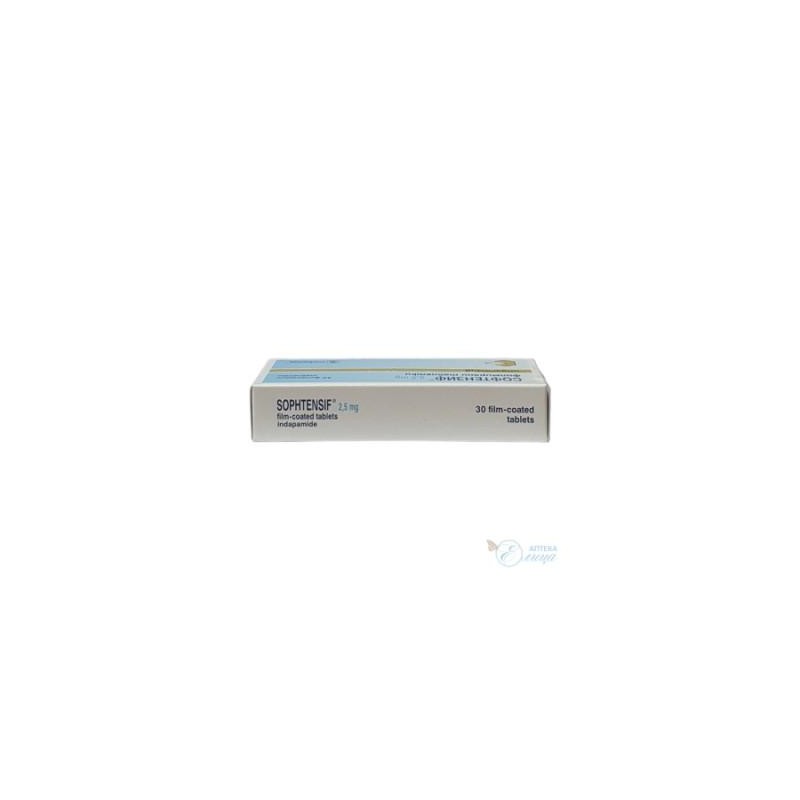

Softensif belongs to a group of medicines called diuretics (water pills). It lowers blood pressure through the following mechanisms:
it increases urine output (enhances the excretion of sodium and chloride from the body);
1. What Softensif is and what it is used for
Softensif belongs to a group of medicines called diuretics (water pills). It lowers blood pressure through the following mechanisms:
it increases urine output (enhances the excretion of sodium and chloride from the body);
it causes relaxation of smooth muscle and dilation of blood vessels (effects resulting from the ability of indapamide to regulate the entry of calcium into cells);
it increases the production of vasodilatory (vessel-widening) substances in the kidneys and the vascular wall.
It is used to treat high blood pressure (hypertension).
2. What you need to know before you take Softensif
Do not take Softensif:
if you are allergic to the active substance indapamide or to any of the other ingredients of this medicine (listed in section 6), or if you are hypersensitive to other sulfonamide-containing medicines;
if you have severe kidney disease;
if you have severe liver disease or suffer from a condition called hepatic encephalopathy (a degenerative brain disorder); or if you have low potassium levels in your blood.
Warnings and precautions
Talk to your doctor or pharmacist before taking Softensif: if you have liver problems; if you have diabetes; if you suffer from gout; if you have any heart rhythm problems or kidney issues; if you require an examination to check the function of your parathyroid gland;
if you notice a decrease in your vision or experience eye pain. These may be symptoms of fluid accumulation in the vascular layer of the eye (choroidal effusion) or an increase in pressure within your eye; such symptoms can occur anywhere from a few hours to a week after starting Softensif. If left untreated, this can lead to permanent vision impairment. If you have previously experienced an allergy to penicillins or sulfonamides, you may be at a higher risk of developing these symptoms.
Inform your doctor if you have experienced photosensitivity reactions.
Your doctor may order blood tests to check for low sodium and potassium levels, or high calcium levels.
If you believe any of these points apply to you, or if you have any questions or concerns regarding the use of this medication, please consult your doctor or pharmacist.
Athletes should be aware that this medication contains an active substance that may result in a positive doping test.
Other medicines and Softensif
Tell your doctor or pharmacist if you are taking, have recently taken, or might take any other medicines. Do not take Softensif concurrently with lithium-containing products (used to treat depression), due to the risk of increased lithium levels in the blood.
You must inform your doctor if you are taking any of the following medications, as special caution may be required:
medicines used for heart rhythm disorders (e.g., quinidine, hydroquinidine, disopyramide, amiodarone, sotalol, ibutilide, dofetilide, digitalis);
medicines used to treat mental health conditions such as depression, anxiety, or schizophrenia (e.g., tricyclic antidepressants, antipsychotics, neuroleptics);
bepridil (used to treat angina pectoris, a condition that causes chest pain);
cisapride (used to treat reduced motility of the esophagus and stomach);
difemanil (used to treat gastric issues such as ulcers, excess acidity, or an overactive digestive system);
sparfloxacin, moxifloxacin, or intravenous erythromycin (antibiotics used to treat infections);
intravenous vincamine (used to treat cognitive disorders in the elderly, including memory loss);
halofantrine (an antiparasitic drug used to treat certain types of malaria); pentamidine (used to treat certain types of pneumonia). mizolastine (used to treat allergic reactions), such as pollen allergies;
non-steroidal anti-inflammatory drugs (NSAIDs) for pain relief (e.g., ibuprofen) or high doses of acetylsalicylic acid;
angiotensin-converting enzyme (ACE) inhibitors (used to treat high blood pressure and heart failure);
amphotericin B for injection (an antifungal medication);
oral corticosteroids, used to treat various conditions, including severe asthma and rheumatoid arthritis;
stimulant laxatives;
baclofen (for the treatment of muscle stiffness associated with conditions such as multiple sclerosis);
potassium-sparing diuretics (amiloride, spironolactone, triamterene);
metformin (for the treatment of diabetes);
iodinated contrast agents (used for medical imaging, including X-rays); calcium tablets or other calcium supplements;
ciclosporin, tacrolimus, or other medications used to suppress the immune system following organ transplantation, or to treat autoimmune diseases or severe rheumatic or dermatological conditions;
tetracosactide (for the treatment of Crohn's disease);
allopurinol (a medicine for the treatment of gout).
Pregnancy and breastfeeding
If you are pregnant or breastfeeding, think you may be pregnant, or are planning to have a baby, ask your doctor or pharmacist for advice before taking this medicine.
The use of this medicine is not recommended during pregnancy. When pregnancy is planned or confirmed, alternative treatment should be started as soon as possible.
Indapamide passes into breast milk. Breastfeeding is not recommended if you are taking this medicine.
Driving and using machines
Softensif does not affect alertness; however, in some cases, reactions may be altered due to a drop in blood pressure, particularly at the start of treatment or when several antihypertensive products are used simultaneously. It is recommended to avoid driving or performing tasks requiring increased attention at the beginning of treatment.
This medicine contains lactose.
If you have been told by your doctor that you have an intolerance to some sugars, contact your doctor before taking this medicinal product.
The wheat starch in this medicine contains only very small amounts of gluten; it is considered gluten-free and is unlikely to cause problems for patients with celiac disease (gluten intolerance).
One Softensif 2.5 mg tablet contains no more than 0.7 micrograms of gluten. If you have a wheat allergy (a condition distinct from celiac disease), you must not take this medicine.
Always take this medicine exactly as your doctor or pharmacist has told you. If you are unsure about anything, ask your doctor or pharmacist.
The recommended dose is one 2.5 mg tablet daily, taken by mouth, preferably in the morning. The tablets may be taken regardless of meals (with or without food). They should be swallowed whole with water; do not chew or break them.
Patients with liver or kidney impairment
If there is a deterioration in the relevant clinical parameters, treatment with Softensif must be discontinued.
If you have taken more Softensif than you should
In the event of accidentally taking a dose significantly higher than that prescribed by your doctor, seek medical attention immediately!
In case of an overdose, the following symptoms may occur—most commonly associated with disturbances in the water-electrolyte balance: nausea, vomiting, cramps, dizziness, drowsiness, confusion, and changes in the volume of urine produced by the kidneys (polyuria or oliguria, potentially progressing to anuria). In more severe cases, a sharp drop in blood pressure may occur. Treatment for an overdose is carried out in a hospital setting and is primarily aimed at removing the stomach contents—via induced vomiting, the use of a gastric tube and lavage, or the administration of activated charcoal—followed by the correction of any fluid and electrolyte imbalances.
If you miss a dose of Softensif
If you forget to take a dose of the medication, take the next dose at the usual time. Do not take a double dose to make up for a missed one.
If you stop taking Softensif
If you have any further questions regarding the use of this medication, ask your doctor or pharmacist.
4. Possible side effects
Like all medicines, this medicine can cause side effects, although not everyone gets them.
Stop taking this medicine and seek medical attention immediately if you notice any of the following serious side effects:
Very rare (affecting up to 1 in 10,000 patients)
Angioedema and/or urticaria (hives). Angioedema is characterized by swelling of the limbs, face, lips, or tongue, or of the mucous membranes in the throat or airways, which may cause difficulty in breathing or swallowing. Severe skin reactions such as a severe rash, redness of the skin over the entire body, intense itching, blisters, peeling and swelling of the skin, inflammation of the mucous membranes (Stevens-Johnson syndrome), toxic epidermal necrolysis, or other allergic reactions.
Inflammation of the pancreas, which may cause severe abdominal or back pain accompanied by a feeling of being seriously unwell.
Frequency unknown (cannot be estimated from the available data)
Irregular heartbeat that is life-threatening.
Brain damage caused by liver disease (hepatic encephalopathy).
Inflammation of the liver (hepatitis).
Other observed adverse reactions include:
Common (may affect up to 1 in 10 patients)
Raised red rashes.
Allergic reactions, primarily affecting the skin, in patients prone to allergic and asthmatic reactions.
Low blood potassium levels.
Uncommon (may affect up to 1 in 100 patients)
Vomiting.
Purpura (small red spots on the skin).
Low blood sodium levels, which may lead to dehydration and a drop in blood pressure.
Impotence (inability to achieve or maintain an erection). Rare (may affect up to 1 in 1,000 patients)
Feeling of tiredness, headache, tingling (paraesthesia), dizziness.
Nausea, constipation, dry mouth.
Low...
Chloride content in the blood.
Low magnesium content in the blood.
Very rare (may affect up to 1 in 10,000 patients)
Changes in blood cell counts, such as thrombocytopenia (a decrease in the number of platelets, which can cause bruising or nosebleeds), leukopenia (a decrease in the number of white blood cells, causing unexplained fever, a sore throat, or other flu-like symptoms—if this happens to you, contact your doctor), and anemia (a decrease in the number of red blood cells).
High levels of calcium in the blood.
Heart rhythm disturbances, hypotension.
Kidney disease.
Impaired liver function.
Frequency unknown (cannot be estimated from the available data)
Seizures.
Worsening of systemic lupus erythematosus (a collagen disease). Photosensitivity (changes in the appearance of the skin) following exposure to sunlight or artificial UVA light.
Nearsightedness (myopia).
Blurred vision.
Visual disturbances.
Reduced vision or eye pain due to high pressure (possible signs of fluid accumulation in the vascular layer of the eye—choroidal effusion—or acute angle-closure glaucoma). Increased uric acid levels, which may lead to more frequent gout attacks.
Elevated blood glucose levels in patients with diabetes.
Increased liver enzyme levels.
Abnormal changes in the electrocardiogram.
If any of the adverse drug reactions become serious, or if you notice any other adverse reactions not mentioned in this leaflet, please inform your doctor or pharmacist.
5. How to store Softensif
Store below 25°C. Store in the original package in order to protect from light. Keep out of the reach of children.
Do not use Softensif after the expiry date which is stated on the carton. The expiry date refers to the last day of that month.
Medicines should not be disposed of via wastewater or household waste. Ask your pharmacist how to dispose of medicines no longer required. These measures will help to protect the environment.
6. Contents of the pack and other information
What Softensif contains
The active substance is: indapamide 2.5 mg per film-coated tablet.
The other ingredients are: lactose monohydrate; wheat starch; microcrystalline cellulose; povidone K 25; magnesium stearate.
Film-coating: Opadry White 33G28707 (hypromellose, titanium dioxide, lactose monohydrate, macrogol/PEG 3000, triacetin).
What Softensif looks like and contents of the pack
White to almost white, round, biconvex film-coated tablets with a diameter of 6 mm.
15 (fifteen) film-coated tablets in a blister pack made of rigid, colourless, transparent PVC/aluminium foil. 2 (two) blister packs in a cardboard box, together with a leaflet.
Softensif belongs to a group of medicines called diuretics (water pills). It lowers blood pressure through the following mechanisms:
it increases urine output (enhances the excretion of sodium and chloride from the body);