
- New
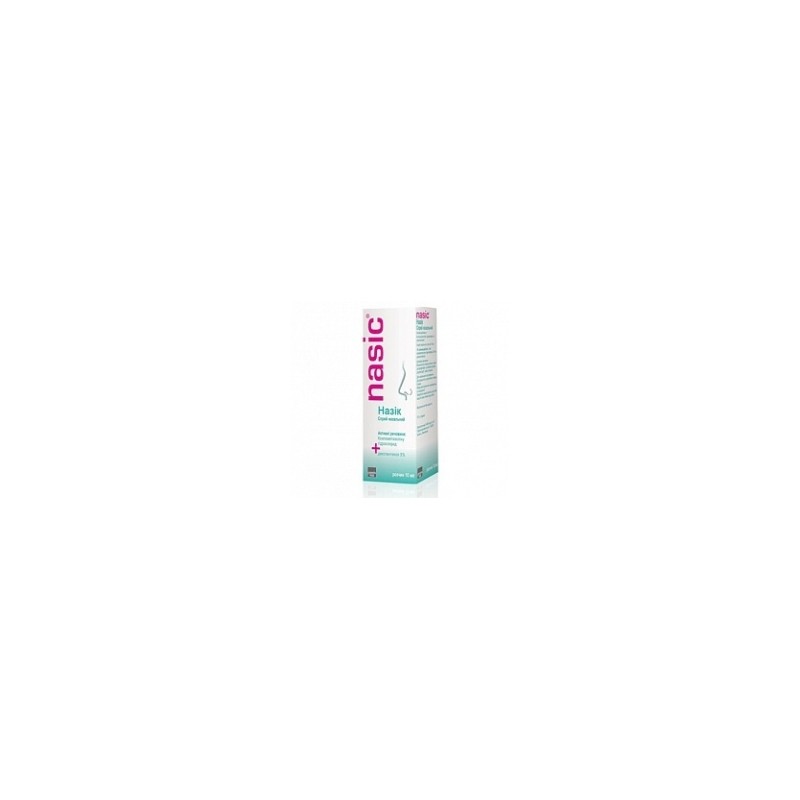
Xylometazoline has a vasoconstrictive effect, thereby reducing swelling of the nasal mucosa.
Dexpanthenol is a derivative of pantothenic acid—a vitamin that promotes the healing of damaged mucosa and possesses a mucoprotective (mucosa-protecting) effect.
1. WHAT NAZIK IS AND WHAT IT IS USED FOR
NAZIK is a nasal spray.
Xylometazoline has a vasoconstrictor effect, thereby reducing swelling of the nasal mucosa.
Dexpanthenol is a derivative of pantothenic acid—a vitamin that promotes the healing of damaged mucosa and provides a mucoprotective (mucosa-protecting) effect.
NAZIK is used for the common cold, to support the healing of lesions on the nasal mucosa and adjacent skin areas, to relieve vasomotor rhinitis, and to treat impaired nasal breathing following nasal surgery. NAZIK is intended for use in adults and children over 6 years of age.
2. WHAT YOU NEED TO KNOW BEFORE YOU USE NAZIK
Do not use NAZIK:
if you are allergic (hypersensitive) to xylometazoline or dexpanthenol, or to any of the other ingredients of NAZIK (listed in section 6),
if you suffer from dry inflammation of the nasal mucosa accompanied by the formation of crusts (rhinitis sicca),
following surgical removal of the pituitary gland through the nose (transsphenoidal hypophysectomy) or other surgical procedures that expose the tissues covering the brain (meninges),
in infants and children under 6 years of age. Warnings and precautions
Talk to your doctor or pharmacist before using NASIK. Pay special attention when using NASIK:
if you are taking monoamine oxidase inhibitors (MAO inhibitors) or other medicinal products that could increase blood pressure,
if you have increased intraocular pressure, especially in cases of narrow-angle glaucoma,
if you suffer from severe cardiovascular diseases (e.g., coronary artery disease, high blood pressure (hypertension)),
if you suffer from a heart condition (e.g., long QT syndrome),
if you have a tumor of the adrenal gland (pheochromocytoma),
if you suffer from metabolic disorders (e.g., an overactive thyroid (hyperthyroidism), diabetes mellitus),
if you suffer from porphyria,
if you have prostatic hyperplasia.
In cases of chronic rhinitis, this medicinal product may be used only under medical supervision, due to the risk of thinning of the nasal mucosa.
Use in children:
Use for longer than 7 days or in doses higher than recommended should be avoided, especially in children. The use of higher doses should only take place under medical supervision.
NASIK contains a concentration of active substances intended for adults and children over 6 years of age; therefore, it is not suitable for infants or children under six years of age.
For children in the 2 to 6 age group, a nasal spray is available with... lower concentrations of the active substances.
Other medicines and NASIC
Please inform your doctor or pharmacist if you are taking or have recently taken any other medicines, including medicines obtained without a prescription.
The simultaneous use of NASIC with certain mood-altering medicinal products (tranylcypromine-type monoamine oxidase inhibitors or tricyclic antidepressants, as well as medicines that increase blood pressure) may lead to an increase in blood pressure due to effects on cardiovascular functions.
Pregnancy, breastfeeding, and fertility
If you are pregnant or breastfeeding, think you may be pregnant, or are planning to have a baby, consult your doctor or pharmacist before using this medicine.
Pregnancy
NASIC should not be used during pregnancy, as there is insufficient data regarding the use of xylometazoline hydrochloride in pregnant women.
Breastfeeding
NASIC should not be used by breastfeeding women, as it is not known whether xylometazoline hydrochloride passes into breast milk. A risk to the nursing infant cannot be excluded.
Fertility
No negative effect on fertility has been identified in connection with treatment using xylometazoline hydrochloride.
Driving and using machines
When this medicinal product is used in accordance with the instructions, no effects on the ability to drive or operate machinery are expected. ...machinery.
NAZIK contains 0.02% benzalkonium chloride per spray.
Benzalkonium chloride may cause irritation or swelling inside the nose, especially if used for a prolonged period.
3. HOW TO USE NAZIK
Always use NAZIK exactly as described in this leaflet or as your doctor or pharmacist has told you. If you are not sure about anything, ask your doctor or pharmacist.
Method of administration:
For nasal use
Glass bottle with a fixed spray nozzle
Remove the protective cap from the spray nozzle. Before using the spray for the first time, pump it several times until an even spray is produced. Thereafter, the metered-dose spray is ready for use.
Insert the spray nozzle into the nostril, keeping the spray in an upright (vertical) position, and spray once. After use, clean the nozzle and replace the protective cap.
or
Glass bottle with a screw-on spray nozzle
Remove the longer protective cap. Unscrew...
...remove the cap from the glass bottle and screw on the nozzle. Remove the protective cap from the nozzle. Before using the spray for the first time, pump it several times until an even spray is produced.
Keeping the nozzle as upright as possible, insert it into each nostril in turn and spray once into each. After use, wipe the nozzle clean for hygienic reasons and replace the protective cap. Once the spray has been used, it will deliver a mist instantly, so there is no need to press the pump repeatedly.
Typically, the effect begins within 5–10 minutes, resulting in improved nasal breathing.
This effect lasts for up to 10 hours after application.
Dosage:
Unless otherwise prescribed by a physician, adults and children over 6 years of age should use one spray in each nostril, up to 3 times daily, as needed. The dosage depends on individual sensitivity and the clinical response.
Duration of use:
NASIK should not be used for longer than 7 days, unless otherwise prescribed by a physician or dentist. The duration of treatment for children should always be determined in consultation with a physician.
A break of several days is required before resuming treatment.
Chronic use of NASIK may lead to persistent swelling and potentially atrophy of the nasal mucosa. Patients suffering from glaucoma, especially narrow-angle glaucoma, should consult a doctor before using NASIK.
If you feel that the effect of treatment with NASIK is too strong or too weak, consult your doctor or pharmacist.
If you have used more than the required dose of NASIK (e.g., an overdose or accidental ingestion of a large amount of NASIK), the following symptoms may occur:
Constriction of the pupils (miosis), dilation of the pupils (mydriasis), fever, sweating, pallor, blue discoloration of the lips (cyanosis), nausea, vomiting, seizures, cardiovascular disturbances such as heart rhythm disorders (tachycardia, bradycardia, cardiac arrhythmias), circulatory collapse, cardiac arrest, and high blood pressure (hypertension), respiratory disturbances (pulmonary edema, respiratory dysfunction), and psychological disorders.
Drowsiness, a drop in body temperature, a decrease in heart rate, a sharp drop in blood pressure, cessation of breathing, and coma may also be observed.
If you suspect that you have used too much of this medicine, please contact your doctor immediately.
If you have missed a dose of NASIK
Do not take a double dose to make up for a missed dose; instead, continue treatment according to the instructions for use. If you have any further questions regarding the use of this product, please ask your doctor or pharmacist.
4. POSSIBLE SIDE EFFECTS
Like all medicines, NASIC can cause side effects, although not everybody gets them.
Very rare (may affect up to 1 in 10,000 people):
seizures (especially in children).
Uncommon (may affect up to 1 in 100 people):
hypersensitivity reactions (e.g., angioedema, skin rash, pruritus).
Rare (may affect up to 1 in 1,000 people):
palpitations, rapid heart rate (tachycardia), increased blood pressure (arterial hypertension).
Very rare (may affect up to 1 in 10,000 people):
restlessness, insomnia, hallucinations (especially in children), fatigue (e.g., drowsiness, sedation), headache, heart rhythm disorders (cardiac arrhythmia); upon the wearing off of the drug's effect, increased mucosal congestion, nosebleeds (epistaxis).
5. HOW TO STORE NASIK
This medicinal product does not require any special storage conditions.
Keep out of the reach and sight of children.
Do not use NASIK after the expiry date stated on the packaging.
The expiry date refers to the last day of the month indicated.
Once opened, the product can be used for 12 weeks.
Medicines should not be disposed of via wastewater or household waste. Ask your pharmacist how to dispose of medicines no longer required. These measures will help to protect the environment.
6. CONTENTS OF THE PACK AND OTHER INFORMATION
What NASIK contains
The active substances are: xylometazoline hydrochloride and dexpanthenol. 10 ml of solution contains 10 mg of xylometazoline hydrochloride and 500 mg of dexpanthenol. Each spray of 0.1 ml (equivalent to 0.10 g) of the solution contains 0.1 mg of xylometazoline hydrochloride and 5.0 mg of dexpanthenol.
The other ingredients are: benzalkonium chloride 0.02 mg/0.1 ml, potassium dihydrogen phosphate, disodium phosphate dodecahydrate (Ph. Eur.), and purified water. What NAZIK looks like and contents of the pack
A multi-dose container with a spray pump.
NAZIK features a permanently fixed spray nozzle. Consequently, a small amount of residual liquid—which the nozzle cannot reach—is technically unavoidable. However, it is guaranteed that at least 10 ml of the solution can be used.
NAZIK is a clear, colorless nasal spray, available in packs containing 10 ml of solution.
This nasal spray is also available with a lower concentration of the active substance, suitable for children between 2 and 6 years of age.
Xylometazoline has a vasoconstrictive effect, thereby reducing swelling of the nasal mucosa.
Dexpanthenol is a derivative of pantothenic acid—a vitamin that promotes the healing of damaged mucosa and possesses a mucoprotective (mucosa-protecting) effect.