
- New
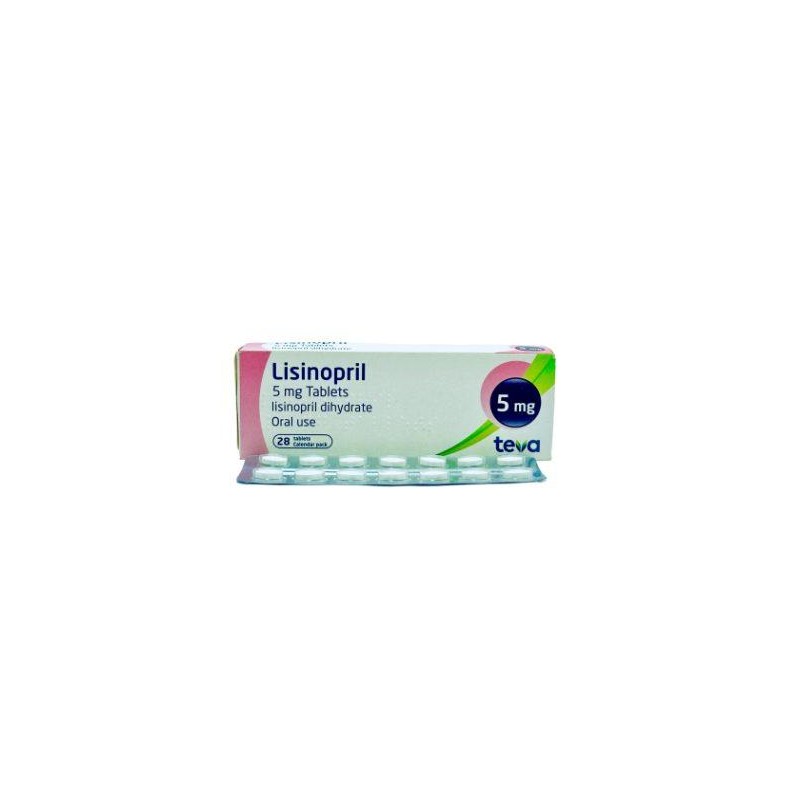
Lisinopril belongs to a group of medicines called angiotensin-converting enzyme (ACE) inhibitors. It lowers blood pressure and peripheral vascular resistance, improves the function of the left and right heart ventricles, increases stroke volume and cardiac output, and reduces pulmonary congestion.
1. What Lisinopril is and what it is used for
Lisinopril belongs to a group of medicines called angiotensin-converting enzyme (ACE) inhibitors. It lowers blood pressure and peripheral vascular resistance, improves the function of the left and right heart ventricles, increases stroke volume and cardiac output, and reduces pulmonary congestion.
Lisinopril is used for:
treating high blood pressure, either alone or in combination with other blood pressure-lowering medicines;
treating heart failure, as an adjunct to cardiac glycosides and diuretics;
preventing the development of left ventricular dysfunction (weakening of the left heart ventricle's function) and heart failure, improving survival in patients with acute myocardial infarction, and maintaining stable hemodynamics during the first 24 hours;
treating renal complications associated with diabetes—specifically kidney disease in patients with high blood pressure and type 2 diabetes, as well as early-stage nephropathy.
2. What you need to know before you take Lisinopril Sopharma
Do not take Lisinopril Sopharma
if you are allergic (hypersensitive) to the active substance or to any of the other ingredients of this medicine (listed in section 6); if you are hypersensitive to other medicines in this group (ACE inhibitors)
if you have experienced angioedema (swelling of the face, lips, tongue, throat, or limbs) during previous treatment with medicines from the ACE inhibitor group;
if you have diabetes or impaired kidney function and are being treated with blood pressure-lowering medicines containing aliskiren;
if you have recently suffered a heart attack (acute) accompanied by sudden changes in blood pressure;
if you have severe heart conditions—narrowing of the aorta or mitral valve, or hypertrophic cardiomyopathy;
if you have bilateral narrowing of the renal arteries or narrowing of the artery to a single kidney;
if you have severe heart function impairment accompanied by a marked drop in blood pressure (cardiogenic shock);
if you are undergoing hemodialysis using high-flux polyacrylonitrile membranes; if your creatinine levels exceed 220 µmol/l;
during the last six months of pregnancy (use of lisinopril is also not recommended during the first three months of pregnancy – see section "Pregnancy, breastfeeding and fertility"). Warnings and precautions
Talk to your doctor or pharmacist before taking Lisinopril Sopharma
if there is a risk of a severe drop in blood pressure due to an imbalance of water and salts, e.g., during treatment with diuretics (water tablets), a salt-restricted diet, or as a result of vomiting or diarrhea;
if you are taking any of the following medicines used to treat high blood pressure:
an angiotensin II receptor blocker (ARB) (also known as sartans – for example, valsartan, telmisartan, irbesartan), especially if you have kidney problems associated with diabetes;
aliskiren;
Your doctor may check your kidney function, blood pressure, and the amount of electrolytes (e.g., potassium) in your blood at regular intervals.
See also the information under the heading "Do not take Lisinopril Sopharma".
if you have narrowing of the aorta (aortic stenosis), narrowing of the renal artery, or thickening of the heart muscle (hypertrophic cardiomyopathy);
if you have a heart, liver, or kidney problem;
if you have recently undergone a kidney transplant;
if you have previously experienced an allergic reaction involving swelling of the face, lips, or tongue, accompanied by difficulty swallowing or breathing; if you have systemic connective tissue diseases, diabetes mellitus, or any infectious-inflammatory conditions (sore throat, fever, etc.);
if you are being treated with allopurinol, procainamide, potassium-sparing diuretics, potassium supplements, potassium-containing salts, or other medicines associated with increased serum potassium levels;
inform your doctor that you are taking lisinopril before any surgical procedure or anesthesia, as a sudden drop in blood pressure may occur;
if you are about to undergo desensitization treatment for insect venom (bees or wasps); desensitization treatment can sometimes increase the risk of anaphylactoid reactions when administered concomitantly with ACE inhibitors;
if you are to undergo a procedure known as LDL-apheresis with dextran sulfate (removal of low-density lipoproteins from the blood in cases of high cholesterol);
if you are undergoing hemodialysis using high-flux membranes (polyacrylonitrile);
if you think you are pregnant (or might be pregnant). The use of Lisinopril Sopharma is not recommended during the first three months of pregnancy. The product must not be used after the third month of pregnancy, as taking it during this period may cause serious harm to your baby (see the section “Pregnancy, breastfeeding and fertility” below).
If any of the following symptoms occur during treatment with Lisinopril Sopharma, immediately...
inform your doctor:
jaundice (yellowing of the skin and the whites of the eyes);
persistent, dry, irritating cough.
Treatment with this medicine requires regular monitoring by your doctor. Therefore, you must undergo the laboratory tests and check-ups prescribed by your doctor.
Children and adolescents
There is limited experience with the use of lisinopril in children over 6 years of age with hypertension. There is no data regarding its use for other indications. Use of the medicine is not recommended in newborns and in children with impaired renal function.
Other medicines and Lisinopril Sopharma
Tell your doctor or pharmacist if you are taking, have recently taken, or might take any other medicines. Your doctor may need to change your dose and/or take other precautions:
if you are taking an angiotensin II receptor blocker (ARB) or aliskiren (see also the information titled "Do not take Lisinopril Sopharma" and "Warnings and precautions").
Tell your doctor:
if you are being treated with water tablets (diuretics) or other medicines for high blood pressure (antihypertensives), undergoing dialysis, have diarrhoea or vomiting, or are undergoing surgery requiring general anaesthesia. A sudden drop in blood pressure may occur when taking these medicines concomitantly with lisinopril. Therefore, treatment with this medicine requires caution.
if you are taking products containing potassium (including dietary supplements) or potassium-sparing diuretics. Taking these concomitantly with this product may cause an excessive rise in blood potassium levels. This could lead to serious adverse reactions.
if you are taking medicines for mental disorders (neuroleptics, tricyclic antidepressants, or lithium salts), as your symptoms may worsen.
if you are undergoing desensitisation (specific immunotherapy) for insect venom or LDL apheresis with dextran sulphate (removal of low-density lipoproteins from the blood during... ...high cholesterol), there is a risk of developing severe allergic reactions (hypersensitivity reactions).
if you are undergoing hemodialysis with high-flux membranes (polyacrylonitrile) and receiving concomitant treatment with lisinopril, allergic reactions may occur (swelling of the tongue and lips, shortness of breath, drop in blood pressure).
if you are taking immunosuppressants (medicines that suppress the immune system), cytostatics, allopurinol, or procainamide, agranulocytosis or neutropenia (complete disappearance or reduction in the number of white blood cells) may occur. In such cases, regular monitoring of your blood count is necessary.
concomitant use with indomethacin and other non-steroidal anti-inflammatory drugs (NSAIDs) may reduce the therapeutic effect of lisinopril.
concomitant use of the product with oral antidiabetic agents (sulfonylureas and biguanides) and insulin may enhance their therapeutic effect (lowering of blood sugar).
if you are to be administered anesthetics, narcotics, or sleeping pills, inform your doctor that you are taking lisinopril. There is a risk of a marked drop in blood pressure.
sympathomimetics (medicines that stimulate the sympathetic nervous system) reduce the effect of lisinopril.
if you are being treated with gold-containing medicines, during... ...concomitant use with lisinopril, nitrite-like reactions (manifested by facial flushing, nausea, dizziness, and low blood pressure) are possible.
Lisinopril can be administered concomitantly with aspirin (acetylsalicylic acid – at cardiac doses), thrombolytics (drugs that break down blood clots), beta-blockers (drugs for treating certain heart conditions), and nitrates.
Lisinopril Sopharma with food, drink, and alcohol
There is no data regarding interactions when taking the product with food. ACE inhibitors potentiate the effects of alcohol. Concomitant use of lisinopril with alcoholic beverages is not recommended.
Pregnancy, breastfeeding, and fertility
If you are pregnant or breastfeeding, think you may be pregnant, or are planning to have a baby, ask your doctor or pharmacist for advice before taking this medicine.
Pregnancy
Use of lisinopril is not recommended during the first three months of pregnancy.
If you are pregnant, planning a pregnancy, or suspect you might be pregnant, please consult your doctor so that your treatment can be changed.
Lisinopril must not be used during the last six months of pregnancy, as it may cause serious harm to your baby.
Breastfeeding
Use of lisinopril is not recommended for mothers of premature infants, nor during the first few weeks after... ...
Driving and using machines
Lisinopril Sopharma may cause dizziness and vertigo in some patients. Careful monitoring for the appearance of such symptoms is necessary. If they occur, do not engage in activities requiring active attention.
3. How to take Lisinopril Sopharma
Always take t...
...this medicine exactly as your doctor has told you. If you are unsure about anything, ask your doctor or pharmacist.
Follow the recommended dosage and method of administration precisely. The medicine is taken once daily—before, during, or after a meal. Food does not affect its absorption. Take the tablets with a sufficient amount of liquid.
Adults
The usual dose is between 5 mg and 40 mg, depending on your condition and response to treatment. If you have impaired kidney function, your doctor will prescribe a lower-than-usual dose.
Use in children and adolescents
Children aged 6 to 16 years with hypertension (high blood pressure)
The recommended starting dose is 2.5 mg once daily for children weighing between 20 kg and 50 kg, and 5 mg once daily for children weighing over 50 kg. For children with impaired kidney function, the doctor will prescribe a lower dose or a less frequent dosing schedule.
If you have taken more Lisinopril Sopharma than you should
If you have taken a higher dose than prescribed, contact your doctor.
If you have missed a dose of Lisinopril Sopharma
Do not take a double dose to make up for a missed one. Take the next dose at the usual time or consult your doctor. If you stop taking Lisinopril Sopharma
The duration of treatment and the dosage of the medicine are determined by your doctor.
Treatment should be discontinued only after consulting your doctor or pharmacist.
If you have any further questions regarding the use of this medicine, ask your doctor or pharmacist.
4. Possible side effects
Like all medicines, this medicine can cause side effects, although not everybody gets them. The following symptoms, unrelated to your underlying condition, may occur:
Common (frequency >1/100 to <1/10) – a sharp drop in blood pressure (hypotension), including a drop in blood pressure upon standing up, causing dizziness, lightheadedness, or fainting; headache and vertigo, cough, vomiting and diarrhea, impaired kidney function.
Uncommon (frequency >1/1,000 to <1/100) – elevated levels of urea, creatinine (markers of kidney function), liver enzymes, and potassium in the blood; palpitations; chest pain (angina pectoris), heart attack; Raynaud's disease – poor blood circulation in the fingers and toes, causing them to become stiff and pale; sleep disturbances, vertigo, reduced sexual drive; depressed mood; numbness and tingling in the hands and feet; taste disturbances; nasal congestion and cold-like symptoms; nausea, abdominal pain, indigestion; rash, itching; cerebrovascular accident (stroke); feeling of general weakness and easy fatigability; hypersensitivity reactions/angioedema: angioedema of the face, limbs, lips, tongue, glottis, and/or larynx.
Rare (frequency >1/10,000 to <1/1,000) – elevated bilirubin levels (a marker of liver function); low blood sodium levels, which may cause fatigue and confusion, muscle twitching, seizures, or coma; decreased hemoglobin and hematocrit levels; confusion, dry mouth; acute renal failure, elevated blood urea levels; rashes, hair loss, psoriasis, gynecomastia (enlargement of breast tissue in men).
Very rare (frequency <1/10,000, including isolated cases) – decreased leukocyte and platelet counts; isolated cases of severe reduction in white blood cells, increasing the risk of infection; isolated cases of a severe reduction in blood cell counts, which may lead to weakness, bruising, or an increased risk of infection; a reduction in red blood cell count, which may lead to paleness or yellowing of the skin; weakness or shortness of breath; enlarged lymph nodes; autoimmune diseases; upper respiratory tract infections, in rare cases accompanied by bronchospasm, difficulty breathing, or sore throat; allergic inflammation of the lungs; a syndrome starting with cholestatic jaundice (yellowing of the skin and the whites of the eyes caused by liver or blood problems), which may progress to severe liver damage with a fatal outcome; hepatitis; inflammation of the pancreas, causing severe abdominal and back pain; intestinal obstruction; constipation; intestinal angioedema (swelling of the lining of the small intestine); loss of appetite; altered sense of taste; reduced urine output or absence of urine (oliguria and anuria); excessive sweating; pemphigus; a severe condition involving blistering of the skin; erythema multiforme (a skin reaction accompanied by rashes); Stevens-Johnson syndrome (a severe condition involving blistering of the skin, mouth, eyes, and genitals); muscle spasms; low blood sugar levels. Skin and subcutaneous tissue disorders may be associated with fever, nail changes, and sensitivity to light.
5. How to store Lisinopril
Store in a dry place protected from light, at a temperature below 25°C. Keep out of the reach of children.
Do not use Lisinopril after the expiry date stated on the carton. The expiry date refers to the last day of that month.
Do not use Lisinopril if you notice changes in the appearance of the tablets as described in your leaflet.
Do not dispose of medicines via wastewater or household waste. Ask your pharmacist how to dispose of medicines no longer required. These measures will help to protect the environment.
6. Contents of the pack and other information
What Lisinopril Sopharma contains
The active substance is lisinopril dihydrate, equivalent to 5 mg, 10 mg, or 20 mg of lisinopril.
The other ingredients are:
5 mg tablets – mannitol, microcrystalline cellulose, maize starch, hypromellose, magnesium stearate, colloidal anhydrous silica.
10 mg tablets – mannitol, microcrystalline cellulose, maize starch, hypromellose, magnesium stearate, colloidal anhydrous silica, yellow iron oxide (E172) colorant. 20 mg tablets – mannitol, microcrystalline cellulose, maize starch, hypromellose, magnesium stearate; colloidal anhydrous silica; colorants: yellow iron oxide (E172) and red iron oxide (E172).
What Lisinopril Sopharma looks like and contents of the pack
5 mg tablets – round, flat, white tablets with a bevelled edge and a score line on one side, and a diameter of 7 mm.
10 mg tablets – round, flat, pale yellow tablets with a bevelled edge and a score line on one side, and a diameter of 7 mm.
20 mg tablets – round, biconvex, pale pink tablets with a bevelled edge and a score line on one side, and a diameter of 8 mm.
10 tablets in a blister made of colourless, transparent PVC/aluminium foil; 3 blisters (30 tablets) in a cardboard box, together with a leaflet.
Lisinopril belongs to a group of medicines called angiotensin-converting enzyme (ACE) inhibitors. It lowers blood pressure and peripheral vascular resistance, improves the function of the left and right heart ventricles, increases stroke volume and cardiac output, and reduces pulmonary congestion.