
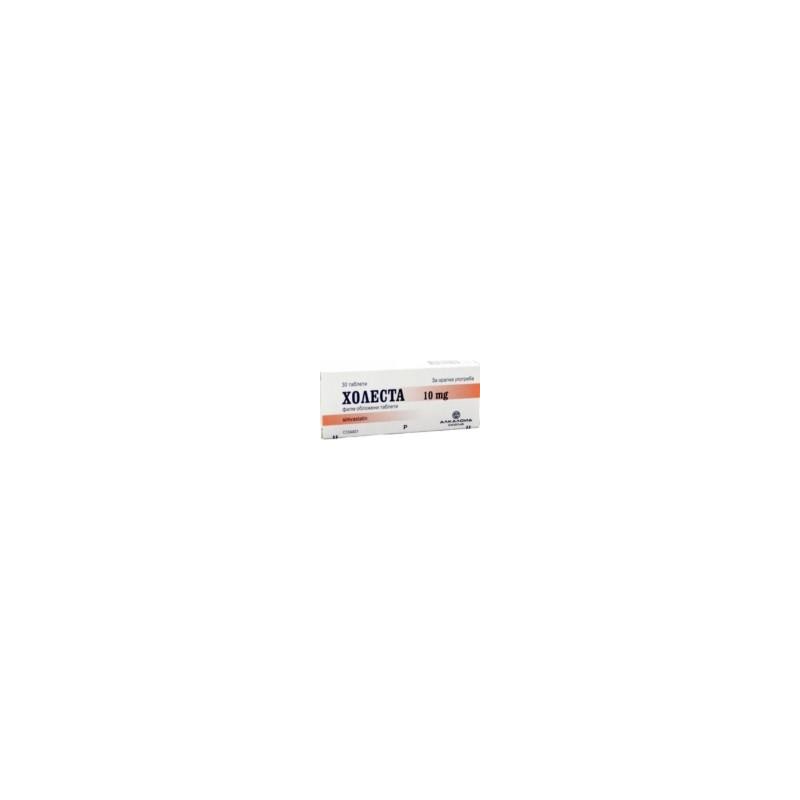
Cholesta contains the active substance simvastatin. Cholesta is a medicine used to lower the levels of total cholesterol, "bad" cholesterol (LDL-cholesterol) and fatty compounds in the blood known as triglycerides. In addition, Cholesta increases the levels of "good" cholesterol (HDL-cholesterol). Cholesta is a member of a group of medicines known as statins. Cholesterol is one of several fatty substances found in the bloodstream.
1. What Cholesta is and what it is used for
Cholesta contains the active substance simvastatin. Cholesta is a medicine used to lower levels of total cholesterol, "bad" cholesterol (LDL-cholesterol) and fatty substances in the blood known as triglycerides. In addition, Cholesta increases levels of "good" cholesterol (HDL-cholesterol). Cholesta is a member of a group of medicines known as statins. Cholesterol is one of several fatty substances found in the bloodstream. Your total cholesterol is mainly made up of LDL and HDL cholesterol. LDL cholesterol is often called "bad" cholesterol because it can build up on the walls of your arteries, forming plaques. Eventually, this build-up of plaque can lead to narrowing of the arteries. This narrowing can slow or block blood flow to vital organs such as the heart and brain. This blockage of blood flow can lead to a heart attack or stroke.
HDL cholesterol is often called "good" cholesterol because it prevents the build-up of bad cholesterol in the arteries and protects against heart disease.
Triglycerides are another form of fat in your blood that can increase your risk of heart disease.
You should follow a cholesterol-lowering diet while taking this medicine.
Cholesta is used in addition to your diet if you have:
high blood cholesterol (primary hypercholesterolaemia) or high levels of fats in the blood (mixed hyperlipidaemia);
an inherited condition (homozygous familial hypercholesterolaemia) where the level of cholesterol in your blood is high. You may also be given other treatment for this.
ischaemic heart disease or if you are at high risk of ischaemic heart disease (especially if you have diabetes, have had a stroke or have another blood vessel disease). Cholesta can prolong your life by reducing the risk of heart disease, regardless of your blood cholesterol levels.
Most people do not have any immediate symptoms of high cholesterol. Your doctor can determine your cholesterol level with a simple blood test. See your doctor regularly and monitor your cholesterol levels.
2. What you need to know before you take Cholesta
Do not take Cholesta:
if you are allergic (hypersensitive) to simvastatin or any of the other ingredients of Cholesta (listed in section 6).
if you currently have liver problems
if you are pregnant or breast-feeding
if you are currently taking one or more of the following medicines:
itraconazole, ketoconazole, posaconazole or voriconazole (medicines used to treat fungal infections);
erythromycin, clarithromycin or telithromycin (antibiotics used to treat various infections);
HIV protease inhibitors such as indinavir, nelfinavir, ritonavir or saquinavir (HIV protease inhibitors are prescribed to treat HIV infection);
boceprevir or telaprevir (used to treat hepatitis C virus infection);
nefazodone (a medicine used for depression);
cobicistat;
gemfibrozil (used to lower cholesterol);
ciclosporin (used in organ transplant patients);
danazol (a synthetic hormone used to treat endometriosis, a condition in which tissue from the lining of the uterus grows outside the uterus);
Do not take more than 40 mg of Cholesta if you are taking lomitapide (used to treat a serious and rare genetic condition associated with high cholesterol);
If you are not sure if your medicine is one of the following, ask your doctor.
Warnings and precautions
Talk to your doctor or pharmacist before taking Cholesta:
If you are taking or have taken in the last 7 days a medicine called fusidic acid (used to treat bacterial infection). The combination of fusidic acid and Cholesta may cause serious muscle problems (rhabdomyolysis).
About all your health problems, including if you have allergies;
If you drink large amounts of alcohol;
If you have or have had liver disease. Cholesta may not be the right medicine for you;
If you are going to have surgery. You may you may need to stop taking Cholesta for a short time if you are Asian, as a different dose may be appropriate for you.
if you have or have had myasthenia gravis (a disease causing generalised muscle weakness, sometimes including the muscles involved in breathing) or ocular myasthenia gravis (a disease causing weakness of the eye muscle), as statins can sometimes make the condition worse or cause myasthenia gravis (see section 4).
Your doctor should do a blood test before you start taking Cholesta and if you have any symptoms of liver problems while you are taking Cholesta. This is to see how well your liver is working.
Your doctor may also want to do blood tests to check how well your liver is working and after you have taken Cholesta.
you have started taking Cholesta.
If you have diabetes or are at risk of developing diabetes, your doctor will monitor you closely while you are taking this medicine. If you have high levels of sugars and fats in your blood, if you are overweight or have high blood pressure, you are most likely to be at risk of developing diabetes.
Tell your doctor if you suffer from severe lung disease.
Contact your doctor immediately if you experience unexplained muscle pain, tenderness or weakness. This is because in rare cases, muscle problems can be serious, including muscle breakdown leading to kidney damage and very rarely death.
The risk of muscle breakdown is greater with higher doses of Cholesta, as well as in certain patients. Tell your doctor if any of the following apply to you: you drink large amounts of alcohol; you suffer from kidney disease; you have thyroid disease; You are over 65 years of age; You are female;
You have ever had muscle problems during treatment with other medicines prescribed to lower cholesterol called "statins" or "fibrates"
You or a close relative has a hereditary muscle disease
Also tell your doctor or pharmacist if you have muscle weakness that is persistent. Additional tests and additional medicines may be needed to diagnose and treat this condition.
Children and adolescents
The safety and effectiveness of Cholesta have been studied in boys aged 10 to 17 years and in girls who have started having their periods at least one year before starting Cholesta (see section "How to take Cholesta"). The use of Cholesta has not been studied in children under 10 years of age. For more information, contact your doctor.
Other medicines and Cholesta
Tell your doctor or pharmacist if you are taking, have recently taken or might take any other medicines.
It is very important to tell your doctor if you are taking any of the medicines listed below. Taking Cholesta with any of these medicines may increase the risk of muscle disorders (some of the medicines are already listed in the section “Do not take Cholesta”).
ciclosporin (a medicine used in organ transplant patients);
danazol (a hormone made artificially and used to treat endometriosis, a condition in which tissue from the lining of the womb grows outside the womb);
medicines such as itraconazole, ketoconazole, fluconazole, posaconazole or voriconazole (used to treat fungal infections);
fibrates such as gemfibrozol and bezafibrate (medicines used to lower blood cholesterol);
erythromycin or clarithromycin, telithromycin or fusidic acid (medicines used to treat bacterial infections). Do not take fusidic acid while taking this medicine (see section 4);
If you need to take oral fusidic acid to treat a bacterial infection, you should temporarily stop taking this medicine. Your doctor will tell you when it is safe to start taking Cholesta again. Taking Cholesta and fusidic acid together may rarely lead to muscle weakness, tenderness or pain (rhabdomyolysis). See detailed information on rhabdomyolysis in section 4.
HIV protease inhibitors such as indinavir, nelfinavir, ritonavir and saquinavir (medicines used to treat HIV infection and AIDS);
antivirals for the treatment of hepatitis C such as boceprevir, telaprevir, elbasvir or grazoprevir (used to treat hepatitis C virus infection);
nefazodone (a medicine to treat depression);
medicines with the active substance cobicistat;
amiodarone (a medicine used for irregular heartbeat);
verapamil, diltiazem or amlodipine (medicines used to treat high blood pressure, chest pain due to heart disease or other heart conditions);
lomitapide (used to treat a serious and rare genetic condition associated with high cholesterol);
daltomycin (a medicine used to treat complicated infections of the skin and skin structures and bacteraemia). The chance of side effects affecting the muscles may be higher when this medicine is taken during treatment with simvastatin (e.g. Cholesta). Your doctor may decide to stop taking Cholesta for a while.
colchicine (a medicine used for gout).
In addition to the medicines listed above, tell your doctor or pharmacist if you are taking or have recently taken any other medicines, including medicines obtained without a prescription. This applies in particular to the following:
medicines to prevent blood clotting such as warfarin, phenprocoumon or acenocoumarol (anticoagulants);
fenofibrate (another type of cholesterol-lowering medicine);
niacin (also a cholesterol-lowering medicine)
;
rifampicin (a medicine used to treat tuberculosis).
Cholesta with food, drink and alcohol
Grapefruit juice contains one or more components that alter the metabolism of some medicines, including Cholesta. Therefore, consumption of grapefruit juice during treatment should be avoided.
Pregnancy, breast-feeding and fertility
If you are pregnant or breast-feeding, think you may be pregnant or are planning to have a baby, ask your doctor or pharmacist for advice before taking this medicine. Do not take Cholesta during pregnancy, if you are trying to get pregnant or if you suspect you are pregnant. If you become pregnant during treatment with Cholesta, stop taking the medicine immediately and consult your doctor.
Do not take Cholesta if you are breast-feeding, as it is not known whether the medicine passes into breast milk.
Driving and using machines
Cholesta is not expected to affect your ability to drive or use machines. However, when driving or using machines, it should be taken into account that dizziness has been reported rarely by some people when taking Cholesta.
Important information about some of the ingredients of Cholesta
Cholesta tablets contain a type of sugar called lactose monohydrate (see section "Contents of the pack and other information"). If you have been told by your doctor that you have an intolerance to some sugars, contact your doctor before taking this medicine.
3. How to take Cholesta
Always take this medicine exactly as your doctor or pharmacist has told you. If you are not sure, ask your doctor or pharmacist.
You should follow a cholesterol-lowering diet while taking Cholesta.
Dosage:
The recommended dose is 5 mg, 10 mg, 20 mg, 40 mg or 80 mg Cholesta by mouth once a day.
Adults:
The usual starting dose is 10 mg, 20 mg and in some cases 40 mg daily. Your doctor may adjust your dose after 4 weeks at the earliest to a maximum dose of 80 mg daily. Do not exceed a dose of 80 mg daily.
Your doctor may prescribe lower doses, especially if you are taking any of the medicines mentioned above at the same time, or if you have certain kidney function conditions. The 80 mg dose is only intended for adult patients with very high cholesterol levels and a high risk of developing heart complications who have not achieved the desired effect on cholesterol levels with lower doses.
Use in children and adolescents
In children (10-17 years), the usual recommended starting dose is 10 mg per day, taken in the evening.
The recommended maximum dose is 40 mg per day.
Cholesta 10 mg: The tablet can be divided into two equal doses.
Cholesta 20 mg and 40 mg: The score line is only to facilitate breaking if you have difficulty swallowing the tablet whole.
Method of administration
Take Cholesta in the evening. You can take it regardless of meals. Continue taking Cholesta until your doctor tells you to stop taking it.
If your doctor has prescribed Cholesta together with a medicine from the group of bile acid sequestrants (medicines used to lower cholesterol), Cholesta should be taken at least 2 hours before or 4 hours after taking this medicine.
If you take more Cholesta than you should
If you accidentally take more than the prescribed dose, please contact your doctor or pharmacist immediately.
If you forget to take Cholesta
Do not take a double dose to make up for a forgotten tablet. Just continue taking Cholesta at the usual time the next day.
If you stop taking Cholesta
If you stop taking Cholesta, your cholesterol level may increase again.
If you have any further questions on the use of this medicine, ask your doctor or pharmacist.
4. Possible side effects
Like all medicines, this medicine can cause side effects, although not everybody gets them.
The following terms are used to describe the frequency of side effects;
rare (may affect up to 1 in 1,000 people);
very rare (may affect up to 1 in 10,000 people);
not known (frequency cannot be estimated from the available data).
The following rare serious side effects have been reported.
If any of these serious side effects occur, stop taking the medicine and tell your doctor immediately or go to the casualty department at your nearest hospital.
muscle pain, tenderness, weakness, muscle tearing or cramps. In rare cases, these muscle problems can be serious, including muscle breakdown and kidney damage; very rarely, death can occur;
Hypersensitivity reactions (allergic reactions) include:
swelling of the face, tongue and throat which may cause difficulty in breathing (angioedema);
very severe muscle pain, most often in the shoulders and thighs;
rash accompanied by weakness of the muscles of the limbs and neck;
pain or inflammation of the joints;
inflammation of the blood vessels;
unusual bruising, skin rashes and swelling, hives, skin sensitivity to sunlight, fever, flushing;
shortness of breath and general malaise;
lupus-like clinical picture (including rash, joint disorders, changes in blood cells);
inflammation of the liver with yellowing of the skin and eyes, itching, dark urine and light stools, feeling tired or weak, loss of appetite, liver failure (very rare);
inflammation of the pancreas often accompanied by severe abdominal pain.
The following very rare serious side effects have been reported: muscle rupture;
serious allergic reaction that may cause difficulty breathing or dizziness (anaphylaxis);
rash that may appear on the skin or mouth sores (lichenoid drug eruptions);
breast enlargement in men (gynaecomastia). The following side effects have also been reported rarely:
reduced red blood cell count (anaemia); numbness or weakness of the arms and legs; headache, tingling sensation, dizziness; blurred vision and impaired vision;
digestive discomfort (abdominal pain, constipation, wind, indigestion, diarrhoea
nausea, vomiting); rash, itching, hair loss; weakness;
sleep disturbances (very rare);
memory impairment (very rare), memory loss, confusion
The following side effects have also been reported, but their frequency cannot be estimated from the available data (frequency not known).
tota):
erectile dysfunction;
depression;
inflammation of the lungs leading to breathing problems including persistent cough and/or shortness of breath or fever;
tendon problems, sometimes complicated by tendon rupture.
myasthenia gravis (a disease causing general muscle weakness, sometimes including the muscles involved in breathing).
myasthenia oculi (a disease causing weakness of the eye muscle). Talk to your doctor if you experience weakness in your arms or legs that gets worse after periods of activity, double vision or drooping eyelids, difficulty swallowing or shortness of breath.
In addition, the following side effects have been reported with some statins:
sleep disturbances, including nightmares;
impaired sexual function.
diabetes. This is more likely if you have high levels of sugars and fats in your blood, if you are overweight and have high blood pressure. Your doctor will monitor your condition while you are taking this medicine.
muscle pain, tenderness or weakness that is persistent and may not go away after stopping Cholesta (frequency not known).
Laboratory tests
Increases in some
5. How to store Cholesta
Store below 25°C.
Keep out of the reach and sight of children.
Do not use this medicine after the expiry date which is stated on the packaging after “EXP”. The expiry date refers to the last day of that month.
Do not throw away any medicines via wastewater or household waste. Ask your pharmacist how to throw away medicines you no longer use. These measures will help protect the environment.
6. Contents of the pack and other information
What Cholesta contains
The active substance is simvastatin. Each tablet contains 10 mg, 20 mg or 40 mg of simvastatin. The other ingredients are:
Tablet core: cellulose, microcrystalline; lactose monohydrate; citric acid monohydrate; ascorbic acid; butylhydroxytoluene; magnesium stearate; starch, pregelatinised; povidone.
Film coating - Opadry pink: polyvinyl alcohol - partially hydrolyzed; titanium dioxide (E171); macrogol; talc; red iron oxide (E172); yellow iron oxide (E172).
What Cholesta looks like and contents of the pack
Cholesta 10 mg are round, biconvex pink-red film-coated tablets with a score line on one side. The tablet can be divided into two equal doses.
Cholesta 20 mg and 40 mg are round, biconvex pink-red film-coated tablets with a score line on one side. The score line is only to facilitate breaking for easier swallowing and not to divide into equal doses.
Cholesta 10 mg and Cholesta 20 mg are packaged in PVC/TE/PVdC blisters sealed with aluminum foil, 10 film-coated tablets in each blister. The carton contains 30 tablets (three blisters) and a patient leaflet.
Cholesta 40 mg is packaged in PVC/TE/PVdC blisters sealed with aluminum foil, 15 film-coated tablets per blister. The carton contains 30 tablets (two blisters) and a patient leaflet.
Cholesta contains the active substance simvastatin. Cholesta is a medicine used to lower the levels of total cholesterol, "bad" cholesterol (LDL-cholesterol) and fatty compounds in the blood known as triglycerides. In addition, Cholesta increases the levels of "good" cholesterol (HDL-cholesterol). Cholesta is a member of a group of medicines known as statins. Cholesterol is one of several fatty substances found in the bloodstream.