
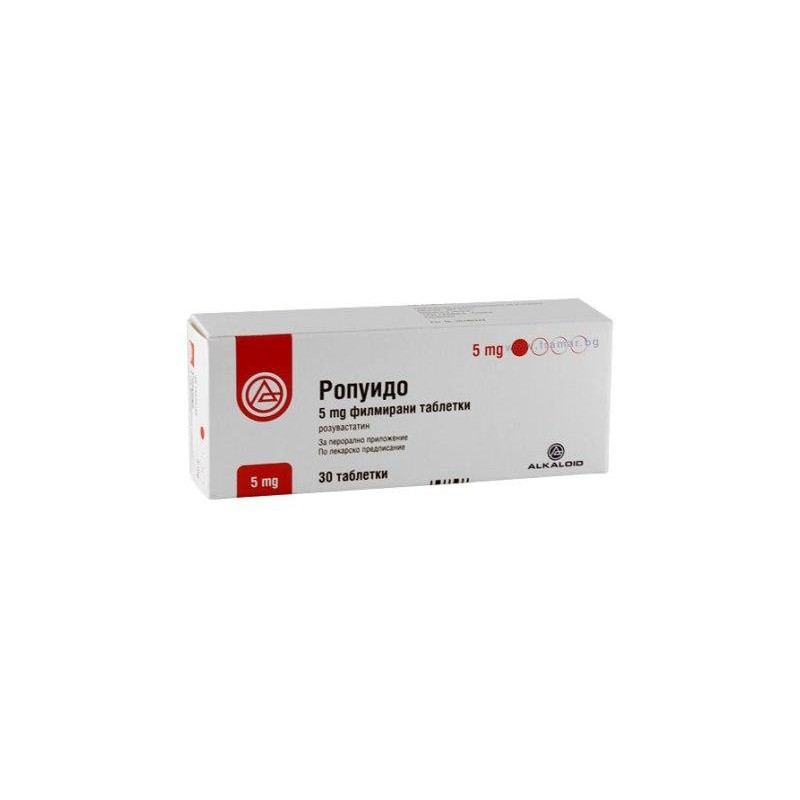
You have high cholesterol. This means you are at risk of having a heart attack or stroke. Ropuido is used in adults, adolescents and children aged 6 years and over to treat high cholesterol. You have been advised to take a statin because changing your diet and increasing your exercise have not been enough to control your cholesterol levels.
1. What Ropuido is and what it is used for
Ropuido belongs to a group of medicines called statins.
You have been prescribed Ropuido because:
You have high cholesterol. This means you are at risk of a heart attack or stroke. Ropuido is used in adults, adolescents and children aged 6 years and over to treat high cholesterol. You have been advised to take a statin because changing your diet and increasing your exercise have not been enough to control your cholesterol levels. You should continue your cholesterol-lowering diet and exercise while you are taking Ropuido.
You have other factors that increase your risk of a heart attack, stroke or related health problems.
Heart attack, stroke and other problems can be caused by a disease called atherosclerosis. Atherosclerosis is caused by a build-up of fatty deposits in the arteries.
Why is it important to keep taking Ropuido
Ropuido is used to correct the levels of fatty substances in the blood called lipids, the most common of which is cholesterol.
There are different types of cholesterol in the blood - “bad” cholesterol (LDL-C) and “good” cholesterol (HDL-C).
Ropuido can lower “bad” cholesterol and increase “good” cholesterol.
It works by helping to block your body from making “bad” cholesterol. It also improves your body’s ability to remove it from the blood.
For most people, high cholesterol levels do not change the way they feel because they do not cause any symptoms. However, if left untreated, fatty deposits can build up on the walls of blood vessels, causing them to narrow.
Sometimes these narrowed blood vessels can become blocked, which can cut off blood supply to the heart or brain and lead to a heart attack or stroke. Lowering your cholesterol levels can reduce your risk of heart attack, stroke or related health problems.
You should continue to take Ropuido even if your cholesterol has reached the right level, as this will prevent your cholesterol levels from rising again and the build-up of fatty deposits. However, you should stop taking it if your doctor tells you to or if you become pregnant.
2. What you need to know before you take Ropuido
Do not take Ropuido
if you are allergic to rosuvastatin or any of the other ingredients of this medicine (listed in section 6).
if you are pregnant or breast-feeding. If you become pregnant while taking Ropuido, stop taking it immediately and tell your doctor. Women should avoid
getting pregnant while taking Ropuido by using appropriate contraception (see “Pregnancy and breast-feeding”).
if you have liver disease.
if you have severe kidney problems.
if you have recurrent or unexplained muscle pain.
if you are taking the combination medicine sofosbuvir/velpatasvir/voxilaprevir (used for a viral liver infection called hepatitis C). if you are taking a medicine called ciclosporin (used, for example, after an organ transplant).
If any of the above applies to you (or if you are not sure), please see your doctor.
In addition, do not take Ropuido 40 mg (the highest dose):
if you have moderate kidney problems (if you are not sure, please ask your doctor).
if your thyroid gland is not working properly.
if you have had recurrent or unexplained muscle pain, a personal or family history of muscle problems, or a previous history of muscle problems when taking other cholesterol-lowering medicines.
if you regularly drink large amounts of alcohol.
if you are of Asian origin (Japanese, Chinese, Filipino, Vietnamese, Korean and Indian).
if you are taking other medicines called fibrates to lower cholesterol
If any of the above applies to you (or you are not sure), please see your doctor.
Warnings and precautions
Talk to your doctor or pharmacist before taking Ropuido:
if you have kidney problems, if you have liver problems.
if you have or have ever had myasthenia gravis (a disease characterised by generalised muscle weakness, sometimes including the muscles involved in breathing), or ocular myasthenia gravis (a disease causing weakness of the eye muscle), as statins can sometimes make the condition worse or cause myasthenia gravis (see section 4).
if you have had recurrent or unexplained muscle pain, a personal or family history of muscle problems, or a previous history of muscle problems when taking other cholesterol-lowering medicines. Talk to your doctor straight away if you have unexplained muscle pain, especially if you feel unwell or have a high temperature. Also tell your doctor or pharmacist if you have muscle weakness that is persistent.
If you have ever had a severe skin rash or
and peeling skin, blistering and/or mouth ulcers after taking rosuvastatin or other related medicines.
if you regularly drink large amounts of alcohol.
if your thyroid gland is not working properly.
if you are taking other medicines called fibrates to lower cholesterol.
Read this leaflet carefully, even if you have previously taken other medicines for high cholesterol.
if you are taking medicines used to treat HIV infection, for example
ritonavir with lopinavir and/or atazanavir, see “Other medicines and Ropuido”.
if you are taking or have taken in the last 7 days a medicine called fusidic acid (a medicine for bacterial infections), either orally or by injection. The combination of fusidic acid and Ropuido may lead to serious muscle problems (rhabdomyolysis). Please see “Other medicines and Ropuido”.
if you are over 70 years of age (as your doctor should choose the right starting dose of Ropuido for you)
if you have severe respiratory failure.
if you are of Asian origin - Japanese, Chinese, Filipino, Vietnamese, Korean and Indian. Your doctor should choose the right starting dose of Ropuido for you.
If any of the above applies to you (or if you are not sure):
do not take Ropuido 40 mg (the highest dose) and talk to your doctor or pharmacist before taking any dose of Ropuido.
Serious skin reactions including Stevens-Johnson syndrome and drug reaction with eosinophilia and systemic symptoms (DRESS) have been reported with Ropuido.
Stop taking Ropuido and seek medical help immediately if you notice any of the symptoms described in section 4.
In a small number of people, statins can affect the liver. This is determined by a simple test that looks for increased levels of liver enzymes in the blood. For this reason, your doctor will usually carry out this blood test (liver function test) before and during treatment with Ropuido.
While you are taking this medicine, your doctor will monitor you carefully if you have diabetes or are at risk of developing diabetes. You are more likely to be at risk of developing diabetes if you have high levels of sugar and fat in your blood, if you are overweight and have high blood pressure.
Children and adolescents
If the patient is over 6 years of age: Ropuido should not be given to children under 6 years of age.
If the patient is under 18 years of age: Ropuido 40 mg tablets are not suitable for use in children and adolescents under 18 years of age.
Other medicines and Ropuido
Tell your doctor or pharmacist if you are taking, have recently taken or might take any other medicines.
Tell your doctor immediately if you are taking any of the following medicines:
ciclosporin (used for example after an organ transplant),
warfarin, ticagrelor or clopidogrel (or another medicine used to thin the blood),
fibrates (such as gemfibrozil, fenofibrate) or another medicine used to lower cholesterol (such as ezetimibe),
indigestion medicines (used to neutralise stomach acid),
erythromycin (an antibiotic),
fusidic acid (an antibiotic, see below and “Warnings and precautions”),
oral contraceptives (the pill),
hormone replacement therapy,
reagrafenib (used to treat cancer),
darolutamide (used to treat cancer),
capmatinib (used to treat cancer),
fostamatinib (used to treat low platelet counts),
febuxostat (used to treat and prevention of high levels of uric acid in the blood),
teriflunomide (used to treat multiple sclerosis),
any of the following medicines used to treat viral infections, including HIV infection or hepatitis C, alone or in combination (see “Warnings and precautions”): ritonavir, lopinavir, atazanavir, sofosbuvir, voxilaprevir, ombitasvir, paritaprevir, dasabuvir, velpatasvir, grasepovir, elbavir, glecaprevir, pibrentasvir.
The effects of these medicines may be changed by Ropuido or they may change the effects of Ropuido.
If you need to take oral fusidic acid to treat a bacterial infection, you should temporarily stop taking this medicine.
Your doctor will tell you when to start taking Ropuido again. Taking Ropuido with fusidic acid may rarely cause muscle weakness, tenderness or pain (rhabdomyolysis). More information on rhabdomyolysis can be found in section 4.
Ropuido with food and drink
You can take Ropuido with or without food.
Pregnancy and breast-feeding
Do not take Ropuido if you are pregnant or breast-feeding. If you become pregnant while taking Ropuido, stop taking it immediately and tell your doctor. Women should avoid becoming pregnant while taking Ropuido by using appropriate contraception.
Ask your doctor or pharmacist for advice before taking any medicine.
Driving and using machines
3. How to take Ropuido
Always take this medicine exactly as your doctor has told you. If you are not sure, ask your doctor or pharmacist.
The recommended dose for adults is:
If you are taking Ropuido for high cholesterol:
Starting dose
Your treatment with Ropuido should start with a dose of 5 mg or 10 mg, even if you have previously taken a higher dose of another statin. The choice of starting dose depends on:
Your cholesterol level.
Your level of risk of heart attack or stroke.
Is there anything that may make you more sensitive to possible side effects?
Talk to your doctor or pharmacist about which starting dose of Ropuido is best for you.
Your doctor may decide to prescribe the lowest dose (5 mg) if:
you are of Asian origin (Japanese, Chinese, Filipino, Vietnamese, Korean and Indian).
you are over 70 years of age.
you have moderate kidney problems.
you are at risk of muscle pain (myopathy).
Dose increase and maximum daily dose
Your doctor may decide to increase your dose. This is to ensure that you are taking the amount of Ropuido that is right for you. If you started with a dose of 5 mg, your doctor may decide to double it to 10 mg, then to 20 mg and then to 40 mg if needed. If you started with 10 mg. Your doctor may decide to double it to 20 mg and then to 40 mg if needed. There will be a gap of four weeks between each dose adjustment.
The maximum daily dose of Ropuido is 40 mg. It is only for patients with high cholesterol levels and a high risk of heart attack or stroke whose cholesterol levels are not lowered enough with 20 mg.
If you are taking Ropuido to reduce the risk of heart attack, stroke or related health problems:
The recommended dose is 20 mg daily. However, your doctor may decide to use a lower dose if any of the factors mentioned above are present.
Use in children and adolescents
The dose range for children and adolescents aged 6 to 17 years is 5 to 20 mg daily. The usual starting dose is 5 mg daily. Your doctor may gradually increase your dose to find the right amount of Ropuido for you. The maximum daily dose of Ropuido is 10 or 20 mg for children aged 6 to 17 years depending on their condition. Take your dose once a day. Ropuido 40 mg tablets should not be used by children.
Taking the tablets
Swallow the tablet whole with a glass of water.
Take Ropuido once a day.
You can take it at any time of the day with or without food. Try to take your tablet at the same time each day, which will help you remember.
Regular cholesterol monitoring
It is important to see your doctor for regular cholesterol monitoring to make sure that your cholesterol has reached and remains at the right level.
Your doctor may decide to increase your dose so that you are taking the amount of Ropuido that is right for you.
If you take more Ropuido than you should
Contact your doctor or the nearest hospital for advice.
If you go into hospital or are being treated for another condition, tell the medical staff that you are taking Ropuido.
If you forget to take Ropuido
Don’t worry, just take the next dose at the right time. Do not take a double dose to make up for a forgotten dose.
If you stop taking Ropuido
Talk to your doctor if you want to stop taking Ropuido. Your cholesterol levels may increase again if you stop taking Ropuido.
If you have any further questions on the use of this medicine, ask your doctor or pharmacist.
4. Possible side effects
Like all medicines, this medicine can cause side effects, although not everybody gets them.
It is important to know what these side effects are. They are usually mild and go away after a short period of time.
Stop taking Ropuido and seek medical help immediately if you have any of the following allergic reactions:
difficulty breathing with or without swelling of the face, lips, tongue and/or throat;
swelling of the face, lips, tongue and/or throat which may cause difficulty in swallowing;
severe itching of the skin (with raised rash);
reddish, flat, target-like or circular patches on the body, often with central blisters, peeling skin, ulcers in the mouth, throat, nose, genitals and eyes. These serious skin rashes may be preceded by fever and flu-like symptoms (Stevens-Johnson syndrome).
a widespread rash, high body temperature and enlarged lymph nodes (DRESS syndrome or drug hypersensitivity syndrome).
Also stop taking Ropuido and talk to your doctor immediately:
If you have any unusual muscle pain that lasts longer than expected. Muscle symptoms are more common in children and adolescents than in
adults. As with other statins, a very small number of people have had unpleasant muscle
effects and have rarely developed into a potentially life-threatening muscle injury known as rhabdomyolysis.
If you experience a muscle tear.
If you have a lupus-like syndrome (including rash, joint disorders and effects on blood cells).
Common side effects (may affect between 1 in 10 and 1 in 100 people):
Headache
Stomach pain
Constipation
Nausea
Muscle pain
Feeling tired
Dizziness
Increase in the amount of protein in your urine - this usually returns to normal on its own without you having to stop taking Ropuido tablets (Ropuido 40 mg only)
Diabetes. This is more likely if you have high levels of sugar and fat in your blood, if you are overweight and have high blood pressure. Your doctor will monitor you while you are taking this medicine.
Uncommon side effects (may affect between 1 in 100 and 1 in 1,000 people):
Rash, itching or other skin reactions
Increase in the amount of protein in the urine - this usually returns to normal on its own without you having to stop taking Ropuido tablets (Ropuido 5 mg, 10 mg and 20 mg only).
Rare side effects (may affect between 1 in 1,000 and 1 in 10,000 people):
Severe allergic reaction - signs include swelling of the face, lips, tongue and/or throat, difficulty swallowing and breathing, severe itching of the skin (with raised lumps). If you think you are having an allergic reaction, stop taking Ropuido and seek medical help immediately.
Muscle damage in adults - as a precaution, stop taking Ropuido and talk to your doctor immediately if you have any unusual aches or pains in your muscles that last longer than expected.
Severe stomach pain (inflammation of the pancreas).
Increase in liver enzymes in the blood.
Bleeding or bruising more easily than normal due to low platelet levels.
Lupus-like syndrome (including rash, joint disorders and effects on blood cells).
Very rare side effects (may affect less than 1 in 10,000 people):
Jaundice (yellowing of the skin and eyes);
Hepatitis (inflammation of the liver);
Traces of blood in the urine;
Nerve damage in the hands and feet (such as numbness);
Joint pain;
Memory loss;
Enlargement of breasts in men (gynaecomastia).
Side effects with unknown frequency may include:
Diarrhea (infrequent bowel movements);
Cough;
Shortness of breath;
Edema (swelling);
Sleep disturbances, including insomnia and nightmares;
Sexual problems;
Depression;
Breathing problems, including persistent cough and/or shortness of breath or high fever;
Tendon injury;
Muscle weakness that is permanent;
Myasthenia gravis (a disease causing general muscle weakness, in some cases including the muscles involved in breathing);
Myasthenia gravis (a disease causing weakness of the eye muscles).
Talk to your doctor if you experience weakness in your arms or legs that gets worse after periods of activity, have double vision or drooping eyelids, difficulty swallowing or shortness of breath.
5. How to store Ropuido
Keep out of the reach of children.
Do not use this medicine after the expiry date which is stated on the carton and blister after “EXP: The expiry date refers to the last day of that month. This medicinal product does not require any special storage conditions.
Do not throw away any medicines via wastewater or household waste. Ask your pharmacist how to dispose of medicines you no longer use. These measures will help protect the environment.
6. Contents of the pack and other information
What Ropuido contains
The active substance is rosuvastatin.
Each film-coated tablet contains 5 mg, 10 mg, 20 mg or 40 mg of rosuvastatin (as rosuvastatin calcium).
The other ingredients are:
Tablet core: microcrystalline cellulose,
Colloidal anhydrous silica, crospovidone, lactose monohydrate, magnesium stearate.
Tablet coating: hypromellose, titanium dioxide (E 171), lactose monohydrate, triacetin, yellow iron oxide (E 172) (only for 5 mg tablets), red iron oxide (E 172) (for 10 mg, 20 mg and 40 mg tablets).
Ropuido 5 mg film-coated tablets: yellow round, biconvex film-coated tablets embossed with “ROS” over “5” on one side, with a diameter of 7 mm.
Ropuido 10 mg film-coated tablets: pink round, biconvex film-coated tablets embossed with “ROS” over “10” on one side, with a diameter of 7 mm.
Ropuido 20 mg film-coated tablets: pink round, biconvex film-coated tablets embossed with “ROS” over “20” on one side, with a diameter of 9 mm.
Ropuido 40 mg film-coated tablets: pink, elliptical, biconvex film-coated tablets debossed with “ROS” on one side and “40” on the other side, with dimensions of 6.8 x 11.4 mm.
The film-coated tablets are packed in aluminium/aluminium blisters. Boxes containing 28 and 30 film-coated tablets in blisters are available. Not all pack sizes may be marketed.
You have high cholesterol. This means you are at risk of having a heart attack or stroke. Ropuido is used in adults, adolescents and children aged 6 years and over to treat high cholesterol. You have been advised to take a statin because changing your diet and increasing your exercise have not been enough to control your cholesterol levels.