
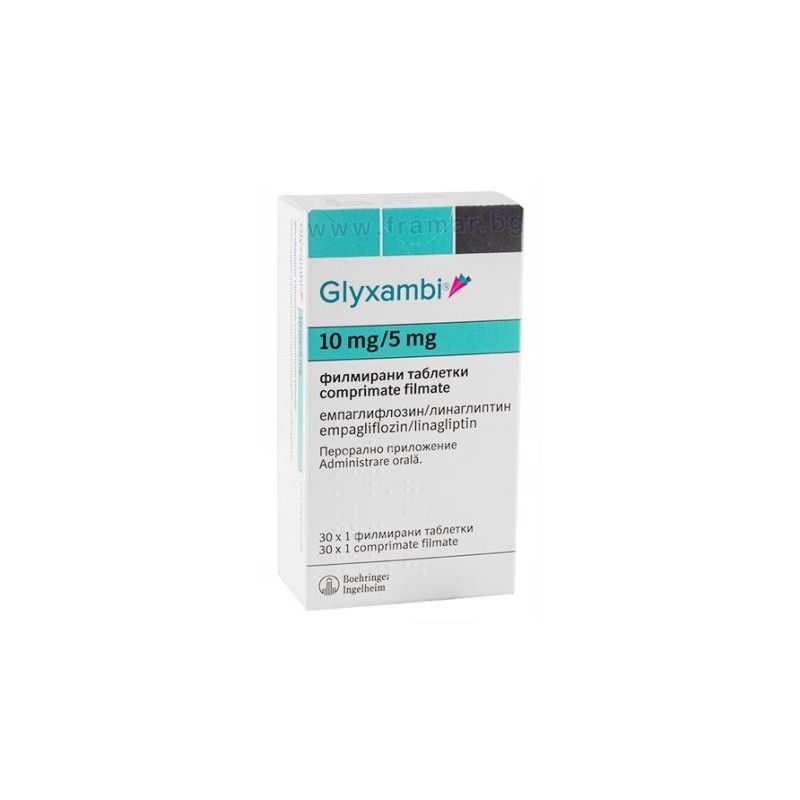
Glyxambi is an antidiabetic medicine that contains two active substances called empagliflozin and linagliptin:
Empagliflozin works by blocking a protein in the kidney called sodium-glucose cotransporter 2 (SGLT2). SGLT2 prevents glucose from being excreted in the urine by returning it to the circulation after the blood has been filtered by the kidneys.
1. What Glyxambi is and what it is used for
Glyxambi is an antidiabetic medicine that contains two active substances called empagliflozin and linagliptin:
Empagliflozin works by blocking a protein in the kidney called sodium-glucose cotransporter 2 (SGLT2). SGLT2 prevents the excretion of glucose in the urine, by returning the ? back into the circulation after the blood has been filtered in the kidneys. By blocking this protein, the drug causes glucose (blood sugar), sodium (salt) and water to be excreted in the urine. This helps lower blood sugar levels that are too high due to type 2 diabetes.
Linagliptin works in a different way - specifically by allowing the pancreas to produce more insulin to lower blood sugar levels. It does this by inhibiting a protein called DPP-4.
Glyxambi is added to metformin and/or a sulphonylurea for the treatment of type 2 diabetes mellitus in adult patients whose diabetes cannot be controlled by the addition of metformin and/or a sulphonylurea in combination with empagliflozin, or by treatment with metformin and/ or a sulphonylurea in combination with linagliptin.
Glyxambi can also be used as an alternative to taking the two medicines empagliflozin and linagliptin as separate tablets. In this case, you should not continue taking either type of tablet separately if you are taking this medicine.
It is important to continue with your diet and exercise as recommended by your doctor, pharmacist or nurse.
What is type 2 diabetes mellitus
Type 2 diabetes is a disease caused by your genes and your lifestyle. If you have type 2 diabetes, your pancreas may not produce enough insulin to control the level of glucose in your blood and your body may not be able to use its own insulin effectively. This leads to high blood sugar levels, which can lead to health problems such as heart disease, kidney disease, blindness, and poor circulation in the extremities.
2. What you need to know before you take Glyxambi
Do not take Glyxambi:
if you are allergic to empagliflozin, linagliptin, another SGLT2 inhibitor (eg dapagliflozin, canagliflozin), another DPP4 inhibitor (eg sitagliptin, vildagliptin) or any of the other ingredients of this medicine (listed in section 6).
Warnings and precautions
Talk to your doctor before taking this medicine and during treatment:
about what you can do to prevent dehydration.
if you have type 1 diabetes (your body does not produce enough insulin). Glyxambi should not be used to treat type 1 diabetes mellitus.
with rapid weight loss, nausea or vomiting, stomach pain, excessive thirst, rapid and deep breathing, confusion, unusual sleepiness or tiredness, sweet-smelling breath, a sweet or metallic taste in the mouth, or a change in the smell of urine or sweat. Contact a doctor immediately or go to the nearest hospital, as
and these symptoms may be a sign of "diabetic ketoacidosis" - a complication that can develop in people with diabetes due to an increased concentration of "ketone bodies" in the urine or blood, which is detected in laboratory tests. The risk of developing diabetic ketoacidosis may increase with prolonged fasting, excessive alcohol consumption, dehydration or a sharp reduction in the dose of
insulin, or after major surgery or serious illnesses that increase your insulin needs.
if you are taking other anti-diabetic medicines known as 'sulfonylureas
derivatives' (eg glimepiride, glipizide) and/or insulin. Your doctor may wish to reduce the dose of these medicines when you take them with Glyxambi to avoid blood sugar falling too low (hypoglycaemia).
if you have or have had pancreatic disease.
if you have severe kidney problems. Your doctor may tell you to take another medicine.
if you are 75 years of age or older, increased urine output as a result of the drug may affect the water-electrolyte balance in your body and increase the risk of dehydration. For possible signs of dehydration, see section 4.
if you are 75 years of age or older, as this medicine is not recommended for use in those older than 75 years.
Contact your doctor if any of the following applies to you during treatment with Glyxambi:
if you develop symptoms of acute pancreatitis, such as persistent, severe abdominal pain. Possible signs are listed in section 4, "Possible side effects". Your doctor may need to change your treatment.
if you are sick, feel sick or have a fever, or if you cannot eat or drink. Such conditions can lead to dehydration. It is possible that your doctor will tell you to see
Talk to your doctor right away if you develop a combination of symptoms of pain, tenderness, redness or swelling of the genitals or the area between the genitals and the anus with a fever or feeling generally unwell. These symptoms may be a sign of a rare but serious or even life-threatening infection called necrotizing fasciitis of the perineum or Fournier's gangrene, which destroys the tissue beneath
the skin. Fournier's gangrene should be treated immediately.
Take care of your feet
It is important, like all diabetics, to check your feet regularly and follow any foot care advice given by your healthcare professional.
Renal function
Before you start treatment with Glyxambi and periodically during treatment, your doctor will check how your kidneys are working.
Glucose in the urine
Because of the way this medicine works, your urine sugar tests will be positive while you are taking this medicine.
Children and adolescents
This medicine is not recommended for children and adolescents under 18 years of age, as it has not been studied in these patients.
Other medicines and Glyxambi
Tell your doctor or pharmacist if you are using, have recently used or might use any other medicines. In particular, you should inform your doctor if you are using the following medicines:
other antidiabetic medicines such as insulin or sulphonylureas. Your doctor may want to lower the dose of these medicines in order to avoid too low a blood sugar level.
medicines to release water from the body (diuretics). Your doctor may tell you to stop taking Glyxambi.
medicines that may have an effect on the breakdown of empagliflozin or linagliptin in the body, such as rifampicin (an antibiotic used to treat tuberculosis) or certain medicines used to treat seizures (such as carbamazepine, phenobarbital or phenytoin). It is possible that the effect of Glyxambi will be reduced.
Pregnancy, lactation and fertility
If you are pregnant, think you may be pregnant or are planning to become pregnant, consult your doctor before using this medicine.
It is not known whether Glyxambi is harmful to the fetus. As a precautionary measure, it is preferable to avoid the use of this medicine during pregnancy.
It is not known whether the active substances in Glyxambi pass into breast milk. Do not use this medicine if you are breast-feeding.
It is not known whether Glyxambi has an effect on human fertility.
Driving and using machines
Glyxambi has a minor influence on the ability to drive and use machines.
Taking this medicine in combination with sulphonylureas or with insulin can lead to very low blood sugar levels (hypoglycaemia), which can cause symptoms such as shaking, sweating and changes in vision and affect your ability to drive and work with machines. Do not drive or use any tools,
if you notice any of these symptoms while taking Glyxambi.
3. How to take Glyxambi
Always take this medicine exactly as your doctor has told you. If you are not sure, ask your doctor or pharmacist.
How much to take
The usual starting dose is 10 mg empagliflozin plus 5 mg linagliptin once daily. For this dose, Glyxambi is available as 10 mg/5 mg film-coated tablets. Your doctor will decide whether you need to increase the dose to one Glyxambi 25 mg/5 mg film-coated tablet (25 mg empagliflozin plus 5 mg linagliptin) once a day. If you are already taking empagliflozin 25 mg and linagliptin 5 mg as separate tablets and switch to
treatment with Glyxambi, you can start directly with Glyxambi 25 mg/5 mg.
Renal impairment:
Talk to your doctor if you have kidney problems. Your doctor may lower your dose or decide to use another alternative medicine.
Liver damage:
Talk to your doctor if you suffer from severe liver damage. Glyxambi is not recommended and your doctor may decide to use another alternative medicine.
Old age:
There is very little experience in patients aged 75 years or older. Treatment with Glyxambi should not be initiated in patients over 75 years of age.
Taking this medicine
Swallow the tablet whole with water.
You can take Glyxambi with or without food.
You can take the tablet at any time of the day. However, try to take it at the same time every day. This will help you remember about the intake.
Your doctor may prescribe Glyxambi together with another antidiabetic medicine. Remember to take all medications as directed by your doctor to achieve the best results for your health.
Diet and exercise can help your body make better use of blood sugar. It is important that you follow the diet and exercise regime recommended by your doctor while you are being treated with this medicine.
If you have taken more than required
If you forget to take Glyxambi
What to do if you miss a tablet depends on how long it is until the next dose:
If it is 12 or more hours before your next dose, take Glyxambi as soon as you remember. Then take the next dose at your usual time.
If it is less than 12 hours until the next dose, skip the missed dose. Then take the next dose at your usual time.
Do not take a double dose of this medication to make up for a missed dose.
If you have stopped taking Glyxambi
Do not stop taking Glyxambi before talking to your doctor. Your blood sugar may rise when you stop taking Glyxambi.
If you have any further questions on the use of this medicine, ask your doctor, pharmacist or nurse.
4. Possible side effects
Like all medicines, this medicine can cause side effects, although not everybody gets them.
Contact a doctor immediately or go to the nearest hospital if you experience any of the following side effects:
Diabetic ketoacidosis (rare, may affect up to 1 in 1,000 people)
These are the signs of diabetic ketoacidosis (see also section 2 "Warnings and precautions"):
increased levels of 'ketone bodies' in your urine or blood
rapid weight loss
nausea or vomiting
tummy ache
excessive thirst
rapid and deep breathing
confusion
unusual sleepiness or tiredness
sweet-smelling breath, a sweet or metallic taste in the mouth, or an unusual smell in urine or sweat.
This can happen regardless of your blood sugar level. Your doctor may decide to temporarily or permanently stop your treatment with this medicine.
Contact your doctor immediately if you notice any of the following serious side effects:
Allergic reactions, uncommon (may affect up to 1 in 100 people)
This medicine can cause allergic reactions, which may be severe, including hives (urticaria) and swelling of the face, lips, tongue, and throat that may make it difficult to breathe or swallow (angioedema).
Inflammation of the pancreas (pancreatitis), occurs infrequently
This drug can cause pancreatitis, which usually presents as persistent, severe abdominal (stomach) pain that may radiate to the back and is often accompanied by nausea and vomiting. Your doctor will need to change your treatment.
Low blood sugar (hypoglycaemia), common (may affect up to 1 in 10 people)
If you take Glyxambi with another medicine that can cause low blood sugar, such as sulphonylureas or insulin, you are at risk of getting low blood sugar (hypoglycaemia). Signs of too low blood sugar may include:
shaking, sweating, feeling very anxious or confused, fast heart rate
very strong hunger, headache
Your doctor will tell you how to correct low blood sugar and what to do if you get any of the signs listed above. If you have symptoms of low blood sugar, eat lumps of sugar, a high-sugar snack, or drink fruit juice. If possible, check your blood sugar and rest.
Urinary tract infections are common
Signs of a urinary tract infection are:
burning sensation when urinating
cloudy urine
pain in the pelvis or lower back (when there is also a kidney infection)
The urge to urinate or passing urine more often may be due to the way this medicine works, but as they may also be signs of a urinary tract infection, if you notice an increase in these symptoms, you should also contact your doctor.
Loss of fluids from the body (dehydration), occurs infrequently
Signs of dehydration are not specific, but may include:
unusual thirst
dizziness or lightheadedness when standing up
fainting or loss of consciousness
Other side effects while taking Glyxambi:
They meet often
a fungal infection of the genitals similar to thrush
inflammation of the nose or throat (nasopharyngitis)
cough
passing more urine than usual or having more frequent urges to urinate
itching
rash
increased amylase enzyme in the blood
increased pancreatic enzyme lipase
thirst
They occur infrequently
straining or pain when emptying the bladder
laboratory blood tests could show changes in blood fat levels, increased red blood cell counts (increased hematocrit values) and changes related to kidney function (decreased filtration rate and increased blood creatinine)
They are rare
inflammation of the mouth
Not known (frequency cannot be estimated from the available data)
skin blisters (bullous pemphigoid)
necrotizing fasciitis of the perineum or Fournier's gangrene, a serious infection of the genitals or the area between the genitals and the anus.
5. How to store Glyxambi
Keep out of the reach of children.
Do not use this medicine after the expiry date which is stated on the blister and carton after EXP. The expiration date corresponds to the last day of the specified month.
This medicine does not require special storage conditions.
Do not use this medicine if you notice that the package is damaged or has been opened.
Do not dispose of medicines down the drain or in the household waste container. Ask your pharmacist how to dispose of medicines you no longer use. These measures will help protect the environment.
6. Contents of the package and additional information
What Glyxambi contains
The active substances are empagliflozin and linagliptin. Each film-coated tablet contains 10 mg empagliflozin and 5 mg linagliptin.
The other ingredients are:
Tablet core: mannitol (E421), pregelatinized starch (maize), maize starch, copovidone, crospovidone, talc and magnesium stearate.
Film coating: hypromellose, mannitol (E421), talc, titanium dioxide (E171), macrogol 6000 and iron oxide, yellow (E172).
The active substances are empagliflozin and linagliptin. Each film-coated tablet contains 25 mg empagliflozin and 5 mg linagliptin.
The other ingredients are:
Tablet core: mannitol (E421), pregelatinized starch (maize), maize starch, copovidone, crospovidone, talc and magnesium stearate.
Film coating: hypromellose, mannitol (E421), talc, titanium dioxide (E171), macrogol 6000 and iron oxide, red (E172).
What Glyxambi looks like and contents of the pack
Glyxambi 10 mg/5 mg film-coated tablets (tablets) are pale yellow, triangular with rounded tops, with flat sides, with beveled edges. They have "10/5" on one side and the Boehringer Ingelheim logo on the other. Each side of the tablet is 8 mm long.
Glyxambi 25 mg/5 mg film-coated tablets (tablets) are pale pink, triangular with rounded tops, with flat sides, with beveled edges. They have "25/5" on one side and the Boehringer Ingelheim logo on the other. Each side of the tablet is 8 mm long.
Glyxambi tablets are available in perforated unit dose blisters from
PVC/PVDC/aluminium.
There are packs of 7 x 1, 10 x 1, 14 x 1, 28 x 1, 30 x 1, 60 x 1, 70 x 1, 90 x 1 and 100 x 1 film-coated tablets.
Not all types of packaging can be put on sale in your country.
Glyxambi is an antidiabetic medicine that contains two active substances called empagliflozin and linagliptin:
Empagliflozin works by blocking a protein in the kidney called sodium-glucose cotransporter 2 (SGLT2). SGLT2 prevents glucose from being excreted in the urine by returning it to the circulation after the blood has been filtered by the kidneys.