
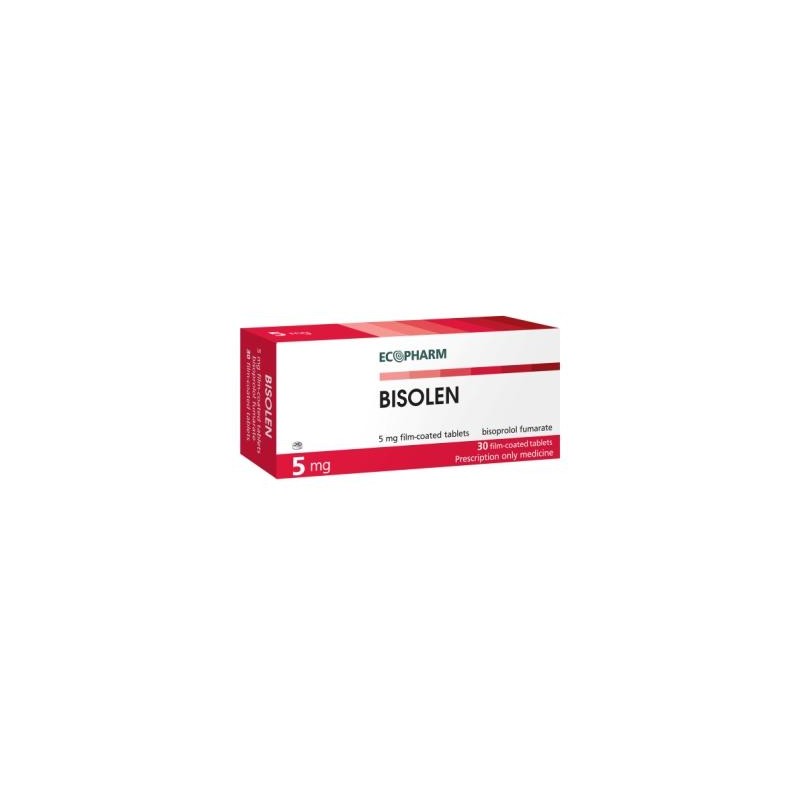

Bisolen belongs to a group of medicines called beta-blockers. These drugs affect the body's response to certain nerve impulses, particularly in the heart. As a result, Bisolen slows down the heart rate and thus increases the heart's efficiency in pumping blood. At the same time, the need for oxygen and blood supply to the myocardium decreases.
What Bizolen is and what it is used for
Bisolen belongs to a group of medicines called beta-blockers. These drugs affect the body's response to certain nerve impulses, particularly in the heart. As a result, Bisolen slows down the heart rate and thus increases the heart's efficiency in pumping blood. At the same time, the need for oxygen and blood supply to the myocardium decreases.
Heart failure occurs when the heart muscle is weak and cannot pump enough blood for the body. Heart failure may appear asymptomatic, but as it progresses, patients may experience shortness of breath, palpitations (at the beginning of usual physical exertion, and later during rest), easy fatigue, and swelling in the feet and ankles due to retention of liquids.
Bisolen is used for:
hypertension (high blood pressure);
angina pectoris (chest pain);
stable chronic heart failure, in addition to treatment with ACE inhibitors, diuretics and possibly cardiac glycosides.
2. What you need to know before you take Bisolen
Do not take Bisolen:
if you are allergic to bisoprolol fumarate or to any of the other ingredients of this medicine (listed in section 6.1);
if you suffer from severe bronchial asthma or severe chronic obstructive pulmonary disease;
with serious problems related to blood circulation in the limbs (e.g. Raynaud's syndrome), which may cause them to become numb, pale or blue;
in untreated pheochromocytoma (a rare tumor of the adrenal gland);
in metabolic acidosis (state of increased acidity of the blood).
Do not take Bisolen if you have any of the following heart conditions:
acute heart failure that is not under medical control;
worsening heart failure requiring intravenous administration of drugs that increase the force of heart contractions;
cardiogenic shock, which is an acute, serious heart condition leading to a drop in blood pressure and severe circulatory disturbance;
certain heart conditions leading to a slow or irregular heartbeat (second or third degree AV block, sinoatrial block, sick sinus syndrome);
low blood pressure that causes problems; slow heart rate that causes problems.
Warnings and precautions
Talk to your doctor, pharmacist or nurse before taking Bisolen: if you have diabetes; if you follow a strict diet;
during desensitizing therapy (e.g. to prevent hay fever); if you suffer from certain heart diseases (such as heart rhythm disorders or Prinzmetal's angina);
if you have kidney or liver problems;
with problems in the blood circulation of the limbs of medium severity;
if you suffer from a chronic bronchial disease of moderate severity (asthma or chronic
obstructive airways disease);
if you have a scaly skin rash (psoriasis);
if you have a tumor of the adrenal gland (phaeochromocytoma);
in thyroid disease.
Also, tell your doctor or pharmacist if you are about to:
desensitizing therapy, as Bisolen can cause an allergic reaction or increase its severity;
anesthesia (e.g. due to surgery) as Bisolen may affect your reaction to this procedure.
Children and adolescents
The use of Bizolen in children and adolescents is not recommended.
Other medicines and Bisolen
You should tell your doctor or pharmacist if you are taking, have recently taken or might take any other medicines.
Do not take the following medicinal products at the same time as Bisolen, before consulting your doctor:
calcium antagonists from the group of verapamil and diltiazem. These medicines are used to treat high blood pressure and angina pectoris (angina);
class I antiarrhythmic drugs (eg, quinidine, disopyramide, lidocaine, phenytoin, flecainide, propafenone). These drugs are used to treat an irregular or irregular heartbeat;
centrally acting blood pressure lowering medicines such as clonidine, methyldopa, moxonidine and rilmenidine.
Under no circumstances should you stop using these medicinal products before consulting your doctor.
Consult your doctor before starting to take the following medicinal products at the same time as Bisolen. as your doctor may need to check your condition more often:
some dihydropyridine calcium channel blockers such as felodipine, amlodipine and nifedipine. These drugs are used to treat high blood pressure and angina pectoris;
class III antihypertensive drugs (eg amiodarone). These drugs are
used to treat an irregular or irregular heartbeat;
topical p-blockers (eg eye drops for the treatment of glaucoma);
nervous system drugs that are used to stimulate the internal organs
or for the treatment of glaucoma (parasympathomimetics
situations for the treatment of severe circulatory diseases (sympathomimetics);
antidiabetic drugs, including insulin;
anesthetics (eg during surgical operations);
digitalis, used to treat heart failure;
non-steroidal anti-inflammatory drugs (NSAIDs) used for
treatment of arthritis, pain or inflammation (eg ibuprofen, diclofenac);
epinephrine - a drug used to treat acute life-threatening allergic reactions
reactions and cardiac arrest;
any drug that can lower blood pressure as a desired or unwanted effect (such as antihypertensives, tricyclic antidepressants, barbiturates, phenothiazines);
mefloquine, used to prevent or treat malaria;
medicines for depression called monoamine oxidase inhibitors (see
except for MAO-B inhibitors);
the antibiotic rifampicin;
ergotamine derivatives in migraine.
Bisolen with food, drink and alcohol
The antihypertensive effect of Bisolen can be enhanced by alcohol.
Pregnancy, lactation and fertility
If you are pregnant or breast-feeding, think you may be pregnant or are planning to become pregnant, ask your doctor or pharmacist for advice before using this medicine.
In general, beta-blockers reduce blood supply to the placenta and may affect fetal development. Bisolen should not be used during pregnancy unless clearly necessary. The newborn should be closely monitored after birth. Symptoms of low blood sugar and slow heart rate usually appear in the first three days after birth.
It is not known whether bisoprolol passes into breast milk, therefore treatment with Bisolen during breastfeeding is not recommended.
Driving and using machines
The ability to drive or operate machinery may be affected by Bisolen, depending on your tolerance to the drug. Pay special attention when starting treatment, when increasing the dose or switching to another drug, as well as when using alcohol at the same time.
3. How to take Bisolen
Always take this medicine exactly as your doctor has told you. If you are not sure, ask your doctor or pharmacist.
In general, treatment should be started gradually with low doses and slowly increased. In all cases, the dose should be adjusted individually, especially according to pulse rate and therapeutic success.
The recommended dose is:
Hypertension (high blood pressure) and angina pectoris (chest pain)
For both indications, the recommended dose is 1 tablet of Bisolen 5 mg once a day. If necessary, the dose can be increased to 2 tablets of Bisolen 5 mg or 1 tablet of Bisolen 10 mg once a day.
The maximum recommended dose is 20 mg once daily.
Stable chronic heart failure
Your doctor should determine the stages of increasing the dose, usually using the following scheme:
1.25 mg bisoprolol once daily for two weeks;
2.5 mg bisoprolol once daily for another two weeks;
3.75 mg bisoprolol once daily for the next two weeks;
5 mg bisoprolol once daily for two weeks;
7.5 mg bisoprolol once daily for the next two weeks;
10 mg bisoprolol once daily as maintenance therapy.
Depending on your individual tolerance to the drug, your doctor may extend the time between different doses.
If your condition worsens or the medicine is no longer tolerated, it may be necessary to reduce the dose or stop the treatment. In some patients, a maintenance dose of less than 10 mg may be sufficient. Your doctor will determine your therapy.
The maximum recommended dose is 10 mg once daily.
In patients with impaired renal and/or liver function
In patients with renal or hepatic dysfunction of mild to moderate severity, no dose adjustment is generally required. In patients with severe renal insufficiency (creatinine clearance < 20 ml/m in) and in patients with severe disorders of liver function, the daily dose of 10 mg should not be exceeded.
In elderly patients
No dose adjustment is necessary in these patients.
Use in children and adolescents
The use of Bizolen in children and adolescents is not recommended.
Application method
Take the tablet whole, with a sufficient amount of liquid, in the morning on an empty stomach or with breakfast.
If you have taken more than the required dose of Bisolen
If you have taken more than the required dose of Bisolen, inform your doctor immediately. He will decide what measures to take. The most common signs of an overdose with Bisolen include: bradycardia (slow heart rate), bronchospasm (sudden narrowing of the airways leading to difficulty breathing, hypotension (a significant drop in blood pressure), acute heart failure or hypoglycemia (low blood sugar) .
If you forget to take Bisolen
Do not take a double dose to make up for a missed tablet. Pro, the next day with the usual dose.
4. Possible side effects
Like all medicines, this medicine can cause side effects, although not everybody gets them.
Adverse reactions are listed below according to their frequency of occurrence:
very common (> 1/10), common (> 1/100 to < 1/10), uncommon (> 1/1,000 to < 1/100), rare (> 1/10,000 to < 1/1,000) , very rare (< 1/10,000), with an unknown frequency (an estimate cannot be made from the available data).
Very common side effects (may affect more than 1 in 10 people):
bradycardia (slow heart rate) in patients with chronic stable heart failure
Common side effects (may affect up to 1 in 100 people):
feeling cold or numb in the limbs;
fatigue, weakness, dizziness, headache;
nausea, vomiting, diarrhea, constipation;
low blood pressure;
worsening heart failure.
Uncommon side effects (may affect up to 1 in 1,000 patients):
slowing of heart rate in patients with hypertension or ischemic heart disease;
feeling weak;
muscle weakness and muscle spasms;
sleep disorders;
depression;
difficulty breathing or wheezing (bronchospasm) in patients with bronchial asthma or obstructive pulmonary disease;
heart rate disorders;
decrease in blood pressure on standing up leading to dizziness.
Rare side effects (may affect up to 1 in 10,000 patients):
increase in blood fat;
hearing disorders;
allergic rhinitis;
increased levels of some liver enzymes (ALAT, ASAT), inflammation of the liver (hepatitis);
allergy-like skin reactions such as itching, redness, rash. Get medical help right away if you experience symptoms of a more severe allergic reaction, which may include difficulty breathing or swelling of the face, neck, tongue, mouth, and throat;
erectile dysfunction;
nightmares, hallucinations;
reduced tear production (important in contact lens wearers)
seizures.
Very rare side effects (may affect up to 1 in 10,000 patients):
inflammation and redness of the eyes (conjunctivitis);
hair loss;
appearance or worsening of a scaly skin rash (psoriasis), a psoriasis-like rash.
5. How to store Bisolen
Keep out of the reach of children.
This medicinal product does not require special storage conditions.
Do not use this medicine after the expiry date which is stated on the carton. The expiration date corresponds to the last day of the specified month.
Do not dispose of medicines down the drain or in the household waste container. Ask your pharmacist how to dispose of medicines you no longer use. These measures will help protect the environment.
6. Contents of the package and additional information
What Bizolen contains
Active substance: bisoprolol fumarate. One Bisolen 5 mg tablet contains 5 mg of bisoprolol fumarate. One Bisolen 10 mg tablet contains 10 mg of bisoprolol fumarate.
Other ingredients:
tablet core: calcium hydrogen phosphate, anhydrous, butylhydroxyanisole, microcrystalline cellulose, crospovidone, starch, pregelatinized, silicon dioxide, colloidal, magnesium stearate;
Film coating: hypromellose, macrogol 400, titanium dioxide, yellow iron oxide. The 10 mg tablets also contain red iron oxide.
What Bizolen looks like and what it contains
Bizolen 5 mg are light yellow, round, film-coated tablets with two cross-scores on both sides. 30 tablets in a package.
Bizolen 10 mg are light orange, round, film-coated tablets with two cross-scores on both sides. 30 tablets in a package.
Bisolen belongs to a group of medicines called beta-blockers. These drugs affect the body's response to certain nerve impulses, particularly in the heart. As a result, Bisolen slows down the heart rate and thus increases the heart's efficiency in pumping blood. At the same time, the need for oxygen and blood supply to the myocardium decreases.