

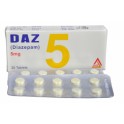
Diazepam Actavis is a product from the group of the benzodiazepines with long duration of action. Has anticonvulsant, sedative and muscle relaxant action, suppresses anxiety. Its effect is due to increased activity of gamaaminomaslenata acid (GABA). Its formation in the brain favors state of relaxation and mental concentration.
WHAT Diazepam Actavis AND WHAT IT IS USED
Diazepam Actavis is a product from the group of the benzodiazepines with long duration of action. Has anticonvulsant, sedative and muscle relaxant action, suppresses anxiety. Its effect is due to increased activity of gamaaminomaslenata acid (GABA). Its formation in the brain favors state of relaxation and mental concentration, because it does not allow nerve cells to excite excessively.
Diazepam Actavis is used in adults for:
Short-term (2-4 weeks) treatment of severe anxiety leading to disability and stress;
Symptomatic treatment of acute alcohol withdrawal (state after abrupt discontinuation of prolonged ingestion of alcohol);
Treatment of muscle spasms, incl. as an additional tool to control muscle spasms in tetanus;
As a further agent for the treatment of some forms of epilepsy - myoclonus;
Premedication - pre-medication prior to surgery in order to support the action of the anesthetic and reduce anxiety.
Diazepam Actavis is used in children to treat:
Nightmares and somnambulism;
As an additional tool to control muscle spasms in tetanus;
In some cases there may be an effect in controlling the tension and irritability accompanying stiffness of the muscles due to damage to the nervous system;
Premedication - pre-medication prior to surgery in order to support the action of the anesthetic and reduce anxiety.
2. BEFORE YOU TAKE Diazepam Actavis
Do not take Diazepam Actavis if:
have an allergy (hypersensitivity) to the active substance, other benzodiazepines or to any of the excipients in the formulation of Diazepam Actavis;
suffer from cirrhosis or have severe liver damage;
breathing difficulty and depressed;
suffering from etc. apnea syndrome (a pause in breathing) during sleep;
suffer from myasthenia gravis (a disease with muscle weakness);
suffer from chronic psychosis, phobia (fear unfounded) and manic states;
suffer from depression or anxiety;
you dependent on other drugs or chemical substances, including alcohol.
Take special care with Diazepam Actavis
Treatment with Diazepam Actavis and benzodiazepine-like drugs may lead to the development of psychic and physical dependence. The risk increases with increasing dose and duration of treatment. Persons with a tendency to self-harm should not have access to large amounts of this product and other benzodiazepines because of the risk of overdose. This applies to patients with a history of alcohol abuse and drugs. It is essential that regular medical supervision at these parties, should be avoided routine repeat prescribing and treatment should be gradually discontinued.
You need to know that the simultaneous use of alcohol and / or drugs that suppress the central nervous system, should be avoided because of the risk of reinforcing the effects of diazepam - it is possible to develop severe drowsiness and respiratory depression and cardiovascular function .
The duration of treatment with Diazepam Actavis should be as small as possible. Patients should be followed about four weeks after the start of treatment, the doctor will assess the need for its continuation, especially if you do not monitor complaints. In general, treatment should last longer than 8-12 weeks.
Benzodiazepines can trigger memory impairment, thereby loses the ability to acquire new memory traces (anterograde amnesia etc.). This may also occur in the application of therapeutic doses, but the risk increases at higher doses. This condition usually occurs several hours after taking the drug and to reduce the risk patients should provide 7-8 hours of uninterrupted sleep.
Administration of diazepam or other benzodiazepines is known that may develop paradoxical reactions such as restlessness, agitation, irritability, aggressiveness, confusion, anger, nightmares, hallucinations, psychoses, inappropriate behavior and other adverse behavioral reactions. In such cases, treatment with the product should be discontinued. Such effects may occur more often in children and the elderly.
Treatment with diazepam can lead to the development of physical and psychological dependence. Abrupt discontinuation of treatment may be accompanied by events etc. "withdrawal syndrome" - headache, muscle aches, pronounced anxiety, tension, restlessness, confusion and irritability. In severe cases develop loss of perception of reality, personality and desensitization tingling of the extremities, hypersensitivity to light, sound and touch, hallucinations or epileptic seizures.
It is important to know that the abrupt discontinuation of treatment in patients with epilepsy or those with a history of seizures can cause seizures. Seizures can occur after suddenly stopping treatment with persons abusing alcohol or drugs. Treatment discontinuation should be done gradually to minimize the risk of withdrawal symptoms.
It is a state of anxiety to reappear, especially when discontinuing treatment. This is a transient syndrome whereby the symptoms that led to the initiation of treatment with diazepam occur in a stronger form. This may be accompanied by other reactions including mood changes, anxiety and restlessness.
Conducted repeated courses of treatment with diazepam for an extended period of time may be lost response to ongoing benzodiazepine treatment.
In bereavement benzodiazepines can depress psychological adaptation.
Taking other medicines
Please tell your doctor or pharmacist if you are taking or have recently taken any other medicines, including medicines obtained without a prescription.
Drugs affecting the gastrointestinal tract and metabolism:
Cimetidine (a medicine for the treatment of ulcer) - reduces the degradation of diazepam in the liver, resulting in enhancing its operation and an increased risk of drowsiness;
Omeprazole (inhibits the secretion of hydrochloric acid in the stomach) - reduces the degradation of diazepam in the liver and decreases its separation from the body;
Cisapride (regulates motor activity of the esophagus and stomach) - increases the utilization of benzodiazepines in the intestinal mucosa and enhances the soothing effect.
Anti-infectives:
Antivirals (atazanavir, ritonavir) - reduces degradation of diazepam in the liver and increases the risk of side effects;
Antifungals (fluconazole, itraconazole, ketoconazole) - hepatic metabolism of diazepam is reduced and the risk of increased side effects;
Rifampicin (an antibiotic used to treat tuberculosis) - increases the breakdown of diazepam in the liver and reduces the effect of diazepam.
Drugs affecting diseases of the musculoskeletal and connective tissue disorders:
Muscle relaxants (drugs that block transmission of nerve impulses to the muscles, for example. Suxamethonium, tubocurarine) - diazepam alters their effect.
Drugs affecting the central nervous system:
Severe drowsiness and respiratory depression and cardiovascular functions can be monitored during concomitant use of diazepam and suppressants nervous system (antidepressants, antiallergic agents, antipsychotic agents, narcosis, other sedatives and hypnotics, opioid analgesics).
Medicines to treat epilepsy (phenytoin, carbamazepine) - diazepam may change their levels in the blood;
Phenobarbital (a drug for the treatment of epilepsy) - there is an increased risk of respiratory depression;
Antipsychotics (clozapine) - when co-administered with diazepam possible significant drop in blood pressure, respiratory depression, loss of consciousness and potentially fatal respiratory arrest;
Medicines to treat depression (fluoxetine) - suppresses the breakdown of diazepam and can lead to drowsiness, lowered psychomotor performance and memory;
Opioid analgesics - increased risk of respiratory depression, low blood pressure and sleepiness;
Hypnotics - increased risk of drowsiness.
Drugs affecting respiratory diseases:
Theophylline (medicine to treat asthma) - reduces the effects of diazepam.
Means for treatment of substance abuse:
Disulfiram - reduces the degradation of diazepam increases and its effects on the nervous system.
Taking Diazepam Actavis with food and drink
During treatment with Diazepam Actavis should not drink alcohol, because it further can suppress the activity of the nervous system and increase the risk of drowsiness.
During treatment with Diazepam Actavis should not consume grapefruit, incl. juices and fresh fruit juices, because it helps to enhance the action of diazepam.
Pregnancy and lactation
Ask your doctor or pharmacist before taking any medicine.
Pregnancy
Diazepam Actavis not be used during pregnancy, especially during the first and last three months, unless there are good reasons for this. Data from studies in animals have shown that the use of diazepam in the first months leads to an increased risk of developing "cleft lip", birth defects of the palate, abnormalities of the nervous system and permanent functional disorder in the offspring. If you are of childbearing age need to know that having consulted the doctor about possible discontinuation of treatment if you intend to become pregnant or have a question for the development of pregnancy.
Administration of high doses or prolonged administration of low doses of benzodiazepines in the last three months of pregnancy causes disruption of fetal heart rate, low blood pressure, a change in the suction reflex, decreased body temperature and moderate respiratory depression in neonates.
In addition, children born to mothers who took benzodiazepines chronically during the last months of pregnancy may develop physical dependence.
Breastfeeding
Diazepam is found in breast milk and therefore it should not be used during breastfeeding. There is a risk of increased sleepiness infant.
Driving and using machines
Actavis diazepam and other drugs of this type have a significant impact on the ability to drive and use machines. Increased sleepiness, memory loss and impaired ability to concentrate, and altered muscle function can further suppress the patient's ability to perform certain actions. The effect is observed immediately after treatment and may last for several days after the interruption due to the long retention time of the active substance in the body.
If insufficient sleep duration occurs, the likelihood of such damage could rise.
Patients should be advised that alcohol may increase the degree of disability and therefore during treatment should be avoided.
Important information about some of the ingredients of Diazepam Actavis
Diazepam Actavis contains lactose as an excipient, making it unsuitable for use in patients with hereditary intolerance to some sugars.
The product contains wheat starch in the composition and is not suitable for use by patients with allergy to wheat, other than the celiac disease.
3. HOW TO TAKE Diazepam Actavis
Always take Diazepam Actavis exactly as your doctor has told you. If you're not sure, ask your doctor or pharmacist.
For optimum effect the dose should be individualized. Treatment should start with the lowest effective dose corresponding to the specified condition.
Treatment duration should be as short. It is a disease to be regularly assessed by a specialist with a view to the need for continuation of treatment, especially if there are no complaints. Treatment should not last more than 2-3 months, including the period of termination.
Your doctor will inform you about the duration of treatment and will explain in detail how to be gradually reduced the dosage administered, as well as the possibility of a recurrence of symptoms during the cessation of treatment.
When administered benzodiazepines long-acting as Diazepam Actavis, it is important to know that when switching to treatment with short-acting benzodiazepines may develop withdrawal symptoms that manifest even in the interval between doses, especially if it is large.
Anxiety
Mature
The recommended dose is 5 mg daily, maximum daily dose of 30 mg, in divided doses.
Insomnia, anxiety related to - 5 to 15 mg prior to sleep.
When treated with the maximum dose treatment should not last more than four weeks.
Symptomatic treatment of acute alcohol withdrawal - 5-20 mg, repeated if necessary after 2-4 hours.
Nightmares and somnambulism
Children - to 5 mg at bedtime.
Conditions accompanied with muscle spasm
Mature
Muscle spasm - up to 15 mg daily in divided doses.
Harnessing the cerebral elasticity - up to 60 mg daily divided doses.
Additional means to control the muscle convulsions in tetanus - up to 10 mg / kg body weight per day.
Children
Control of tension and irritability in cerebral elasticity in some cases - to 40 mg daily, divided into individual doses.
As an additional tool to control muscle convulsions in tetanus - as in adults.
Addition to the treatment of some forms of epilepsy
Adults - up to 60 mg daily, divided into several doses.
Premedication
Adults - the recommended dose of 5 to 20 mg.
Children - recommended dose of 10 mg.
Benzodiazepines should not be given to children without careful assessment of disease specialist. The duration of treatment should be minimal.
Elderly
Doses should not exceed half of the recommended under normal conditions. These patients should be closely controlled at the start of treatment in order to minimize the dose and / or frequency of administration, in order to prevent overdosing, due to the accumulation of the active substance in the body.
Patients with impaired hepatic function
Patients with impaired hepatic function should receive a reduced dose.
Patients with impaired renal function
In renal insufficiency, the retention time of diazepam remained unchanged because such patients do not require a dose adjustment.
Obese patients
Various studies have shown that the behavior of diazepam in the body is altered in obese patients, compared to patients of normal weight. The cumulative amounts of the active metabolite desmetildiazepam also significantly increased. These data indicate that overweight patients require a significantly longer period of treatment with diazepam in order to achieve the maximum effect, compared to patients of normal weight. Similarly therapeutic effect, side effects, including withdrawal symptoms may occur a long time after the termination of long-term treatment with diazepam in patients with overweight.
If you take more dose Diazepam Actavis
Symptoms
Overdose of benzodiazepines is usually manifested by drowsiness loss of consciousness (coma). In mild forms manifested by drowsiness, mental disorder and lethargy (sleepiness, apathy, lethargy). In more severe forms appears gait abnormalities, low blood pressure, respiratory depression, slow heartbeat, coma (rarely) and death (very rare). Upon receiving concomitant medications with effect on the nervous system, alcohol, likely effects of overdose are more pronounced increases in the absence of supportive measures that can be fatal.
Treatment
After an overdose of benzodiazepines should induce vomiting (up to 1 hour after dosing) if the patient is conscious, if unconscious - to perform gastric lavage. If there is no stomach emptying of the expected beneficial effect in reducing the absorption through the intestinal mucosa, it should be applied charcoal. Treatment is carried out in intensive care, special attention must be paid to respiratory and cardiac functions. Specific, administered intravenously, an antidote (antidote) in emergency situations Annex (Flumazenil). Patients who require such intervention must be under constant observation in hospital. Particular attention requires the implementation of annexes in epileptic patients treated with benzodiazepines.
Diazepam Actavis is a product from the group of the benzodiazepines with long duration of action. Has anticonvulsant, sedative and muscle relaxant action, suppresses anxiety. Its effect is due to increased activity of gamaaminomaslenata acid (GABA). Its formation in the brain favors state of relaxation and mental concentration.